
Tasting Some of the Best Wines of France
Wine buyers and media had the opportunity to taste some of the best wine from Champagne, Provence. South-West, Languedoc and Bordeaux


Floyd Cowan Words & Photos
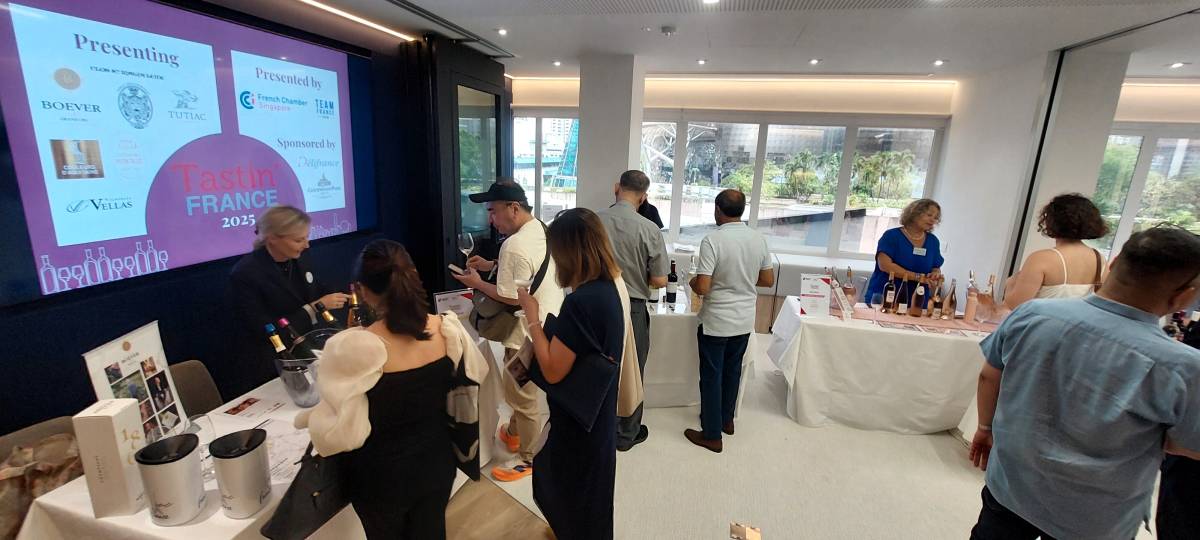
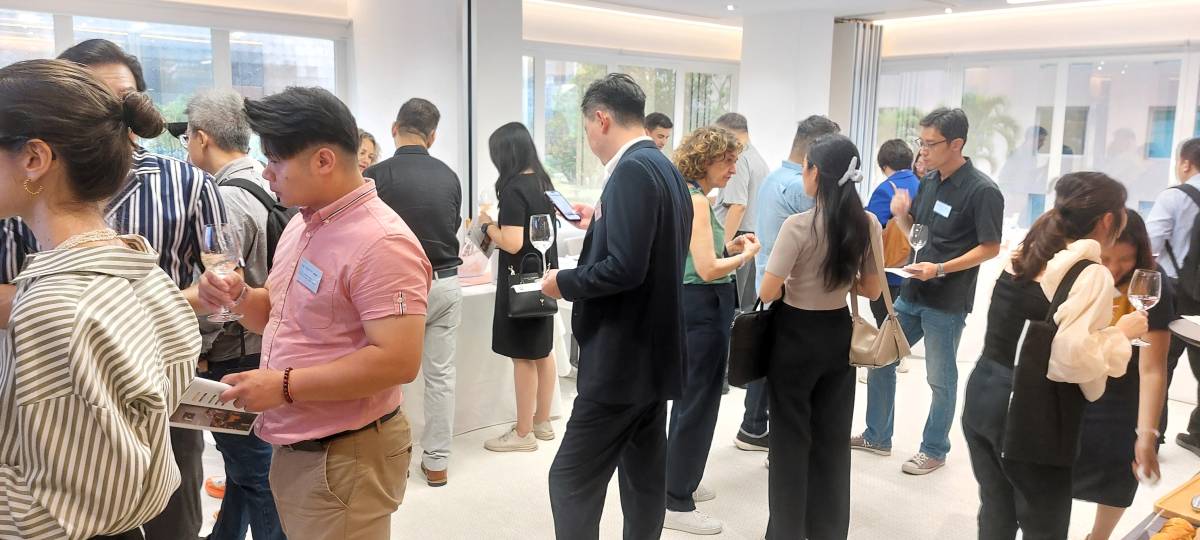
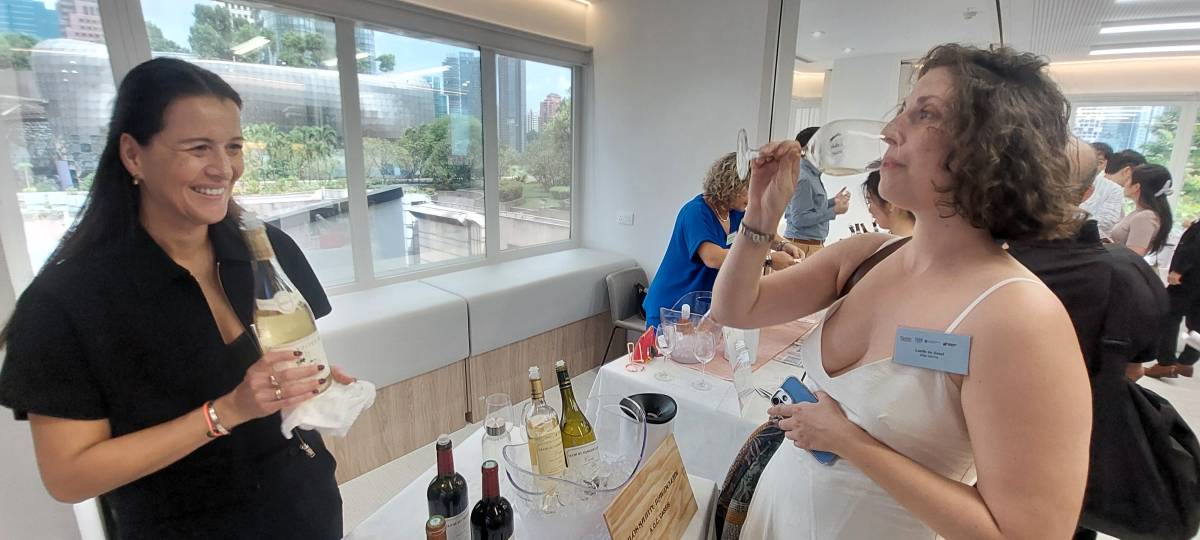
(October 1, 2025, Singapore) Well Suck my Duck. Business France and the French Chamber of Commerce in Singapore held a professional wine tasting where six French wine and spirits producers and merchants from Champagne, Provence, South-West, Languedoc and Bordeaux presented nearly 60 wines.
Arriving on time, only a few people were there ahead of me, so I approached Damien Bazin at the Vignobles Vellas table. He informed me that the family had owned the estate for four generations but had only begun producing wine 30 years ago. “Prior to that they sold the grapes to wineries in the region. They like to do things differently. They like to be bold and stand out, which can be difficult in France with its extensive wine industry.”


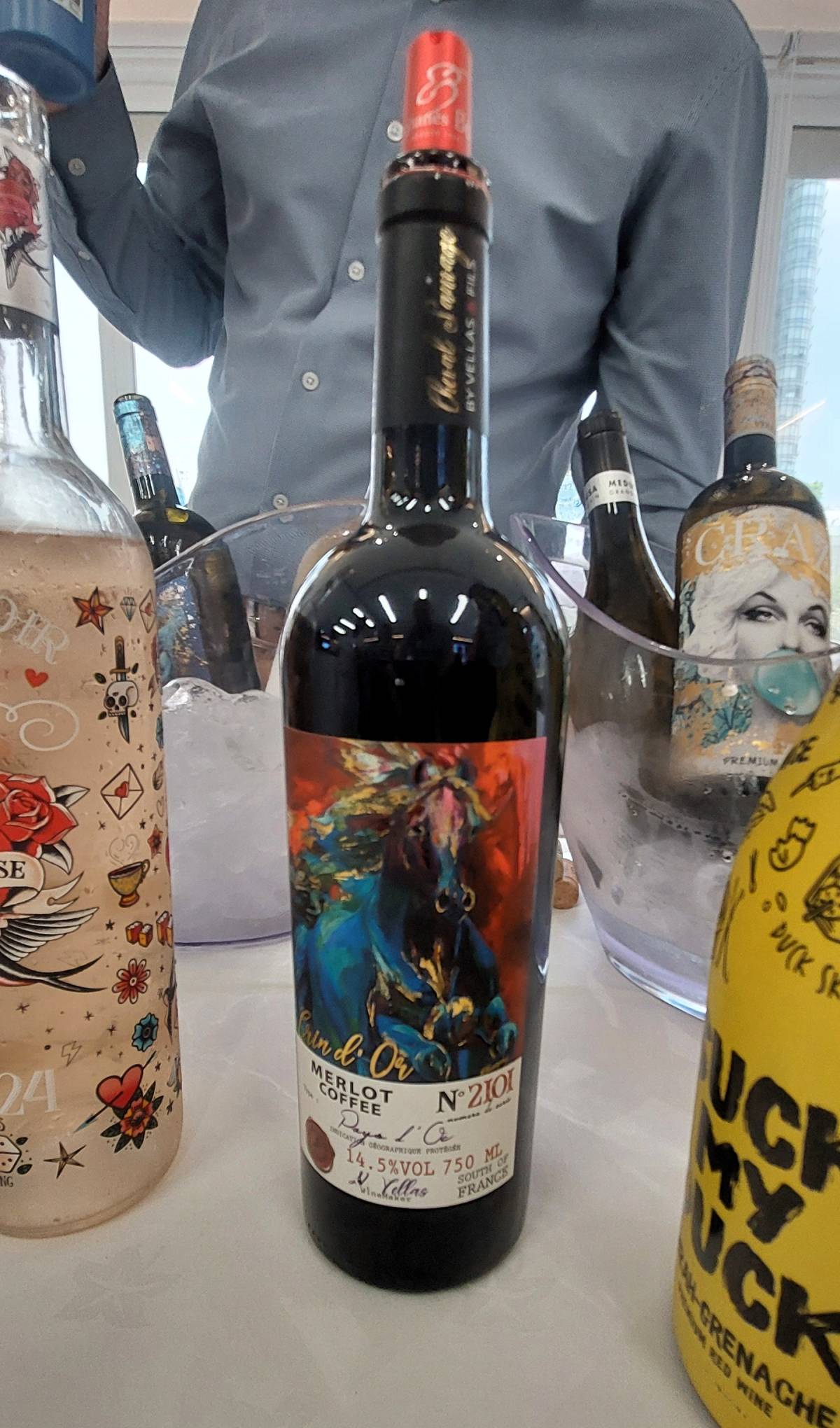
“Suck My Duck” has gained attention not just for its flavor, a bold and cheeky red wine, but for its irreverent branding, which reflects Vellas’ flair for marketing and modern appeal. It’s popular among adventurous wine drinkers and those looking for something memorable on the shelf.
I am not sure that I liked it, but Crin d'Or Merlot Coffee is very memorable. It is a unique red wine from the Pays d’Oc region in southern France, crafted to highlight coffee aromas and flavors alongside the natural richness of Merlot. Coffee or toffee? It was like having a lozenge. The 100% Merlot has bold (very bold) notes of roasted coffee, dark chocolate, and black fruits. It evokes the warmth and depth of a fine espresso.
Vellas’s creative lineup is known for pushing boundaries with expressive, emotion-driven cuvées. It’s ideal for pairing with chocolate desserts, grilled meats, or simply sipping as a conversation piece. Their names and labels are very distinctive. Vignobles Vellas produces over 200 wines that span a wide range of appellations and styles, reflecting the diversity of their 12 estates across the Languedoc-Roussillon, Occitanie, and Vaucluse regions in southern France.

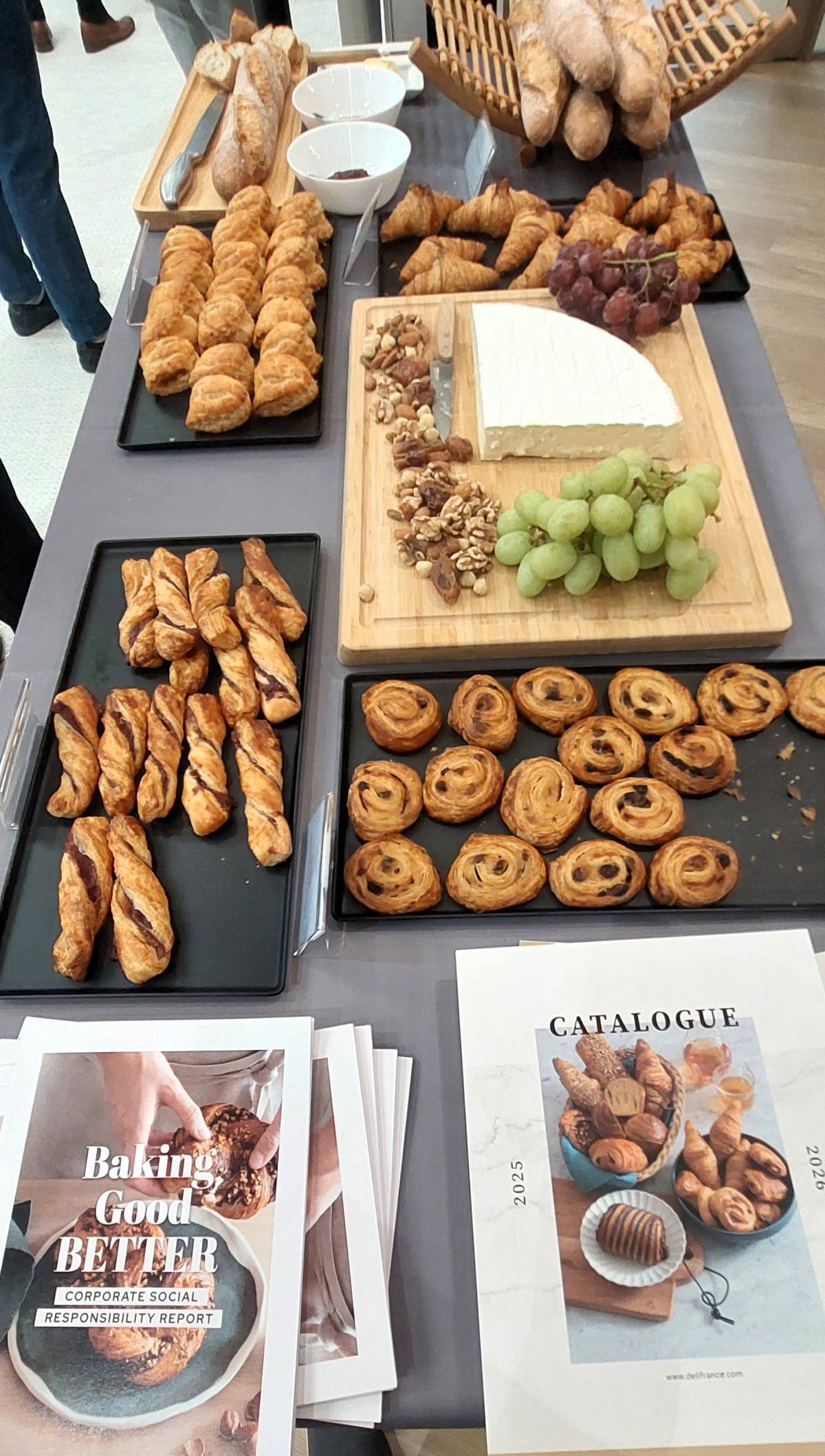
I took a break, wrote some notes and enjoyed grapes, bread and brie before visiting Close Sainte Magdelene’s table that presented three whites and one red. Aurélie Sack, whose family lineage is deeply rooted in winemaking in southern France, introduced me to the whites, which she noted were best enjoyed during hot weather. “At our estates, that are located right on the Mediterranean, the summers are very hot.” She showed me a photo of the mansion perched on a cliff over the sea. Beautiful.
The whites are elegant, each one distinct and shaped by the limestone soils of Saint-Magdeleine. The wines awakened the palate like a breeze off the Mediterranean. Aurélie shared with me: “These wines are created and designed with the ambition to capture the moment between minerality and conviviality.”
The Rouge Cassis is light and breezy like the whites. It is a rare and refined red wine from the coastal appellation of Cassis, Provence—an area far better known for its whites. This cuvée, made primarily using Grenache, Cinsault, and Mourvèdre grapes, is a standout expression of the estate’s commitment to organic viticulture and terroir-driven winemaking.

Marie Serre was waiting for me at the Tutiac table. This is one of the largest wine cooperatives in Bordeaux, officially known as Les Vignerons de Tutiac. Based in the Côtes de Bordeaux region, it represents over 500 winegrowers and manages more than 4,000 hectares of vineyards across 15 appellations, including Blaye, Bourg, and Bordeaux Supérieur. They have a strong commitment to eco-friendly viticulture and HVE (High Environmental Value) certification. They produce reds, whites, rosés, and sparkling wines, with a focus on accessibility and quality.

Tutiac have built a reputation for combining cooperative strength with individual vineyard expression. If you're exploring Bordeaux’s modern face, Tutiac is a great example of how tradition and scale can coexist.

As I tried the Cap Fraîcheur Rouge, a rare red wine as the domain is best known for its elegant whites, Marie noted the tannins were very mellow resulting in a wine that is not so sharp. I thought she said melted tannins, and I liked that image, but we will go with mellow.
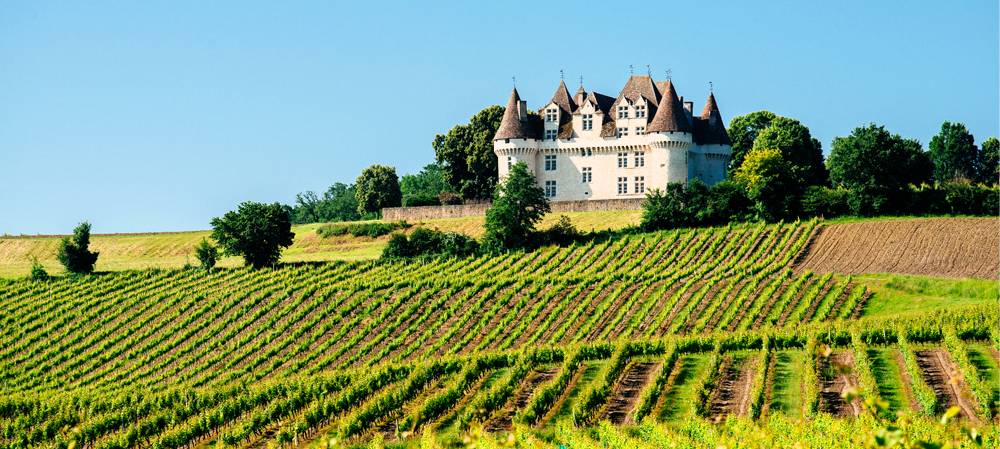
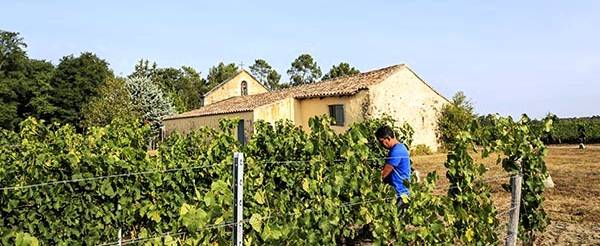
Couleurs D’Aquitaine is a major wine cooperative in southwest France, formed in 2008 through the union of three historic cellars: Vignerons de Sigoulès, Cave de Monbazillac and Alliance Aquitaine. They represent over 300 winegrowing families and manage more than 3,500 hectares of vineyards across Bergerac, Périgord, and Bordeaux appellations.
They produce red, white, rosé, sweet wines (including Monbazillac), and sparkling. Their Signature Wines are Le Haut Païs Cabernet Sauvignon (AOC Périgord), Monbazillac Botrytiswines and Bergerac Rouge & Blanc. 
Couleurs d'Aquitaine Photo
“Couleurs d’Aquitaine focuses on Sustainable viticulture,” Xinyi Jing, Sales Manager for Asia told me. “We are one of the major economic players in the region and we are working to protect its heritage by preserving jewels such as Château Monbazillac and Château Renaudie. We are going further by implementing a sustainable cultivation method and management method within the vineyard and our bottling center.
“We’ve become a leading marketer of Bergerac wines, offering a wide range of accessible, terroir-driven cuvées that reflect the diversity of southwest France.
Les Domaines Montaud, a family-run wine estate nestled in the heart of Provence is known for producing authentic, terroir-driven wines across 250 hectares of sun-drenched vineyards. The estate is located in Pierrefeu-du-Var, within the Côtes de Provence appellation, and is celebrated for its commitment to tradition, biodiversity, and sustainable viticulture.
Nathalie Pigaglio states that the family estate perpetuates an ancestral know-how combined with a permanent quest for excellence. From vine to bottle, every step is carefully managed to ensure authenticity and harmony in each cuvée. Their wines reflect the soul of Provence—sun, sea breeze, and aromatic herbs.
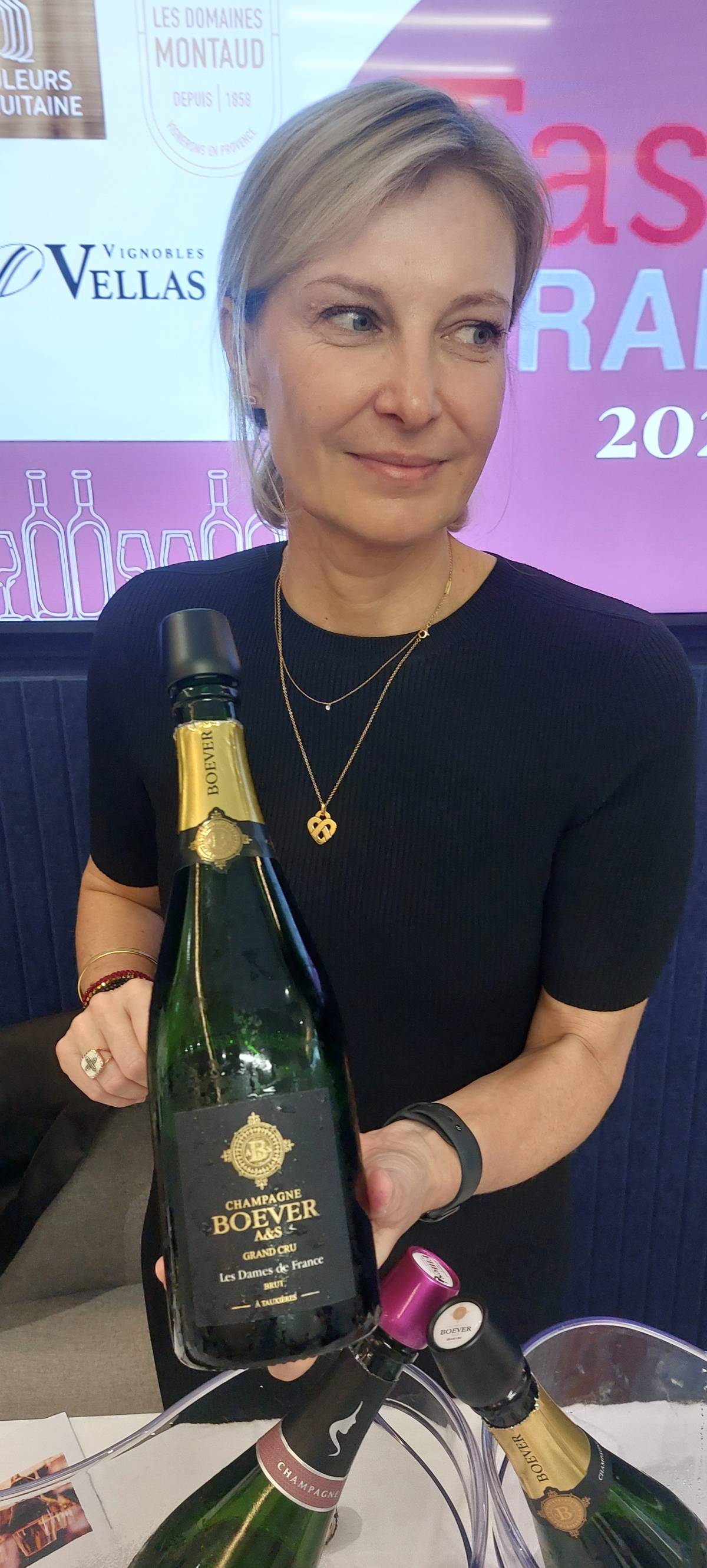
My final stop was at Champagne Boever A&S where Anne-Sophie poured the bubbly. Loca ted in Louvois, this family-run Champagne house is in the prestigious Montagne de Reims area of Champagne. Managed by Anne-Sophie and her husband Sébastien, the estate is rooted in three generations of winemaking tradition dating back to 1946, when the Boever family first began producing Champagne. Mainly Pinot Noir and Chardonnay grapes are used by the Boever family who emphasizes authenticity, sustainability, and precision. Nearly every step of their Champagne-making process is done on-site. Their wines reflect the character of their land and the care of their craft.
Their Signature Cuvée is 3 Filles de Caractère, Grand Cru, Extra Brut, named in honour of their daughters. It is a Blend of 50% Pinot Noir and 50% Chardonnay and was Awarded gold at the World Feminalise competition and the Prix des Vinalies.