

Masterpieces of Islamic Art from the Musée du Louvre Travel to Singapore
Landmark Exhibition at Asian Civilisations Museum Runs Until January 2027
Images courtesy of Asian Civilisations Museum
Additional Images Floyd Cowan
(Singapore, 16 June 2026) – The Asian Civilisations Museum (ACM), Singapore, is my favorite museum in the Lion City. It is rich with quality historic pieces artfully displayed throughout the museum. And now, it has gotten even better with a loan from the Musée du Louvre, Paris.
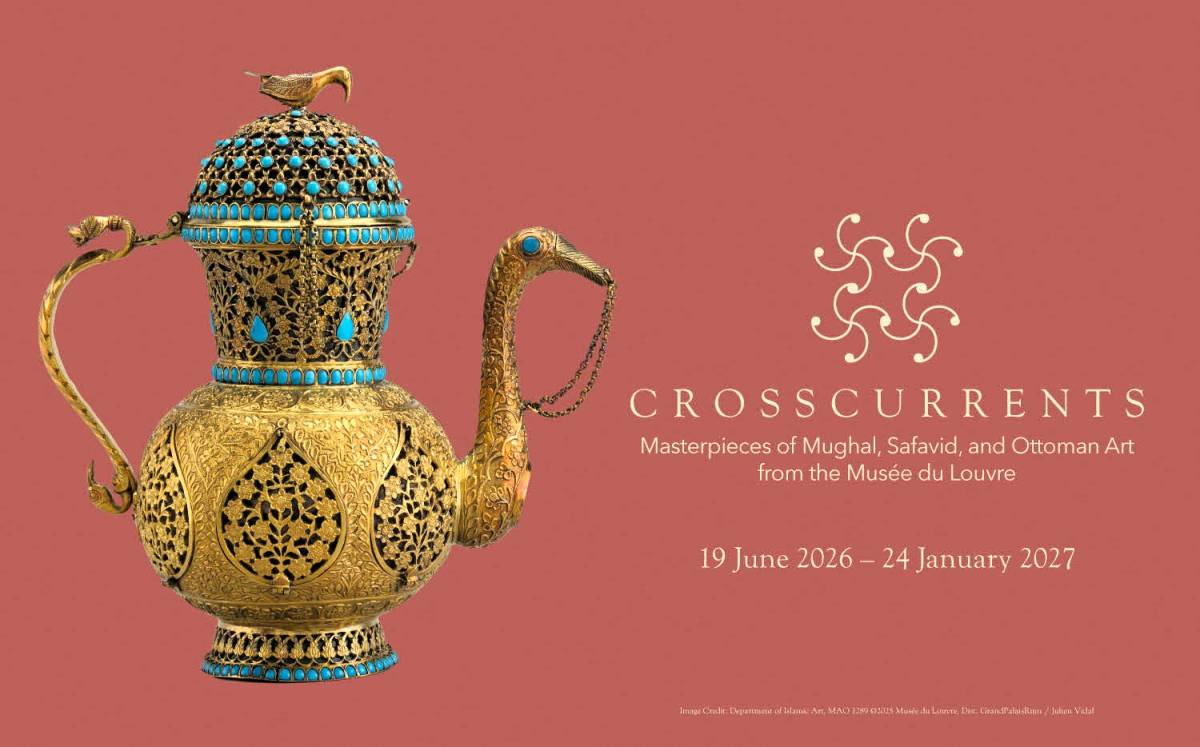
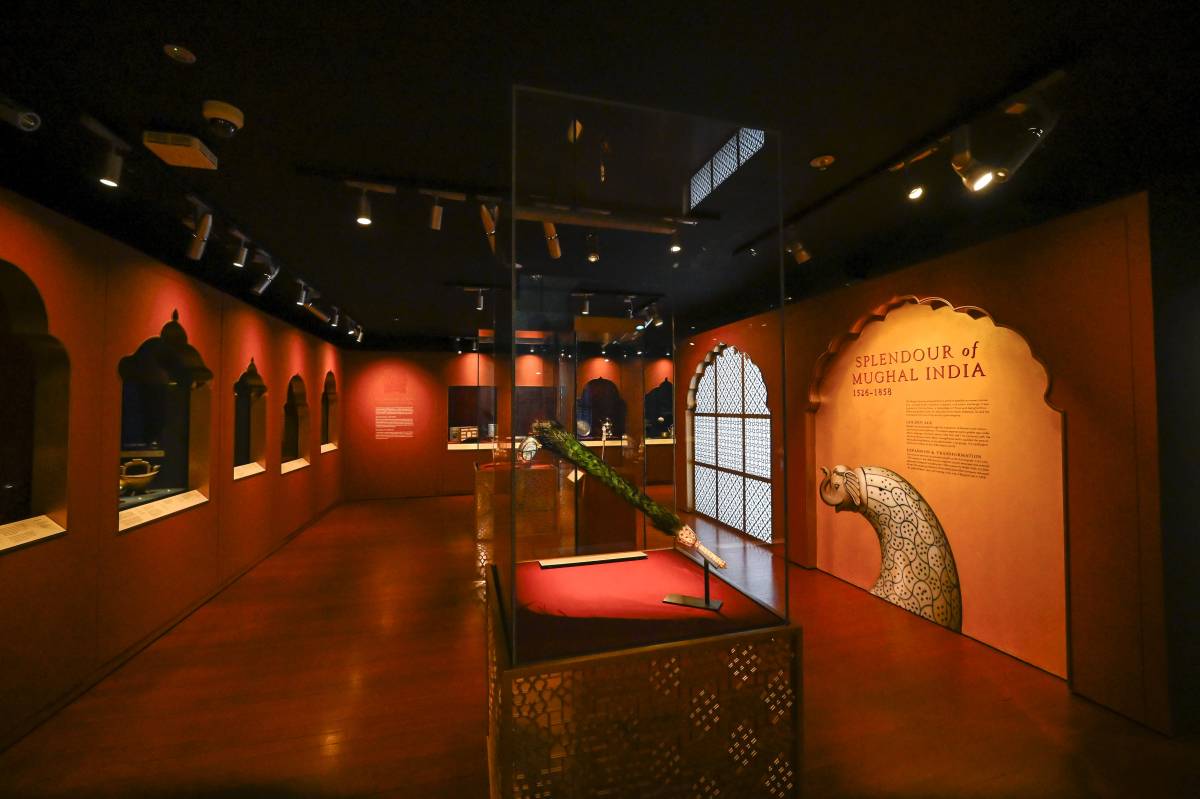
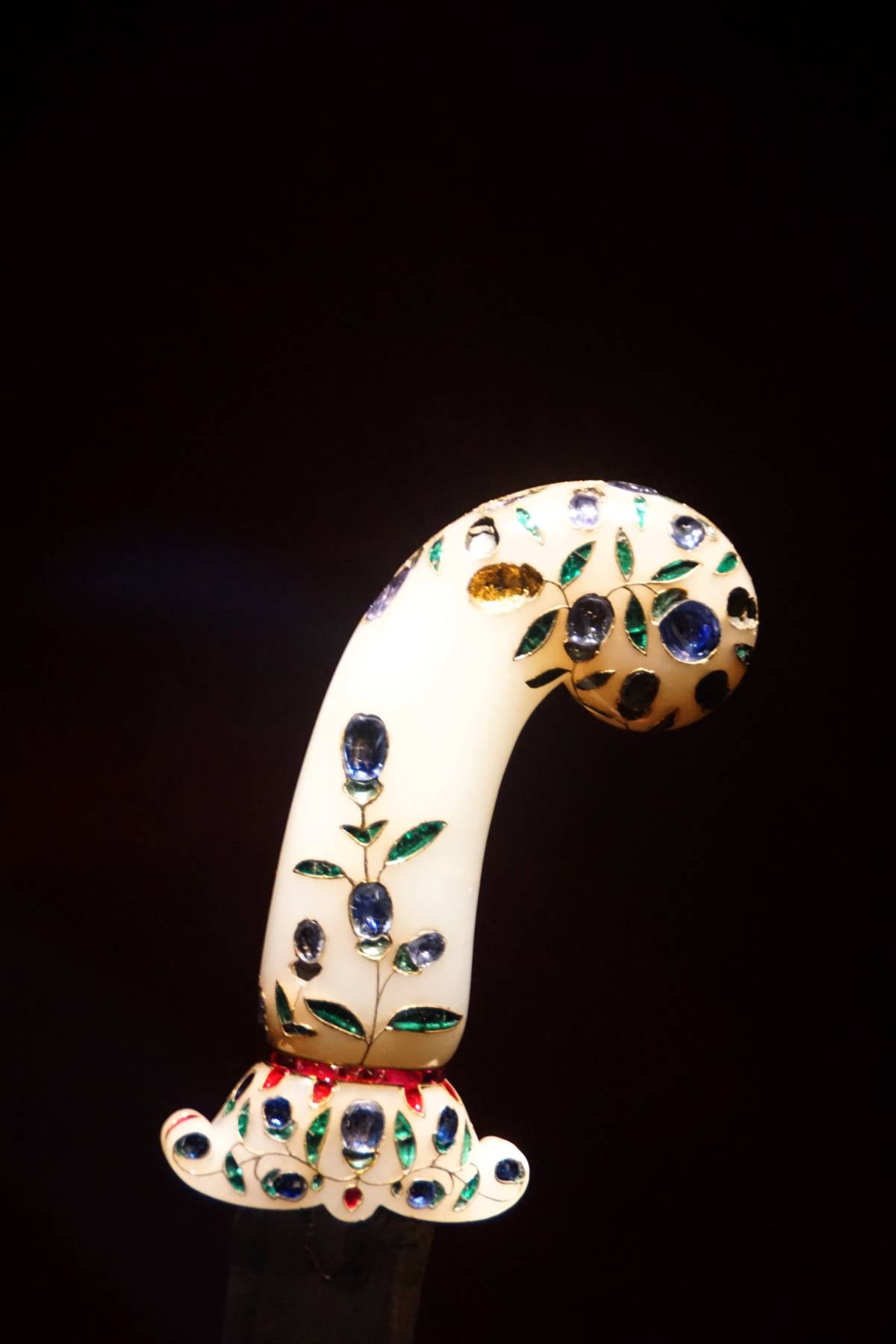
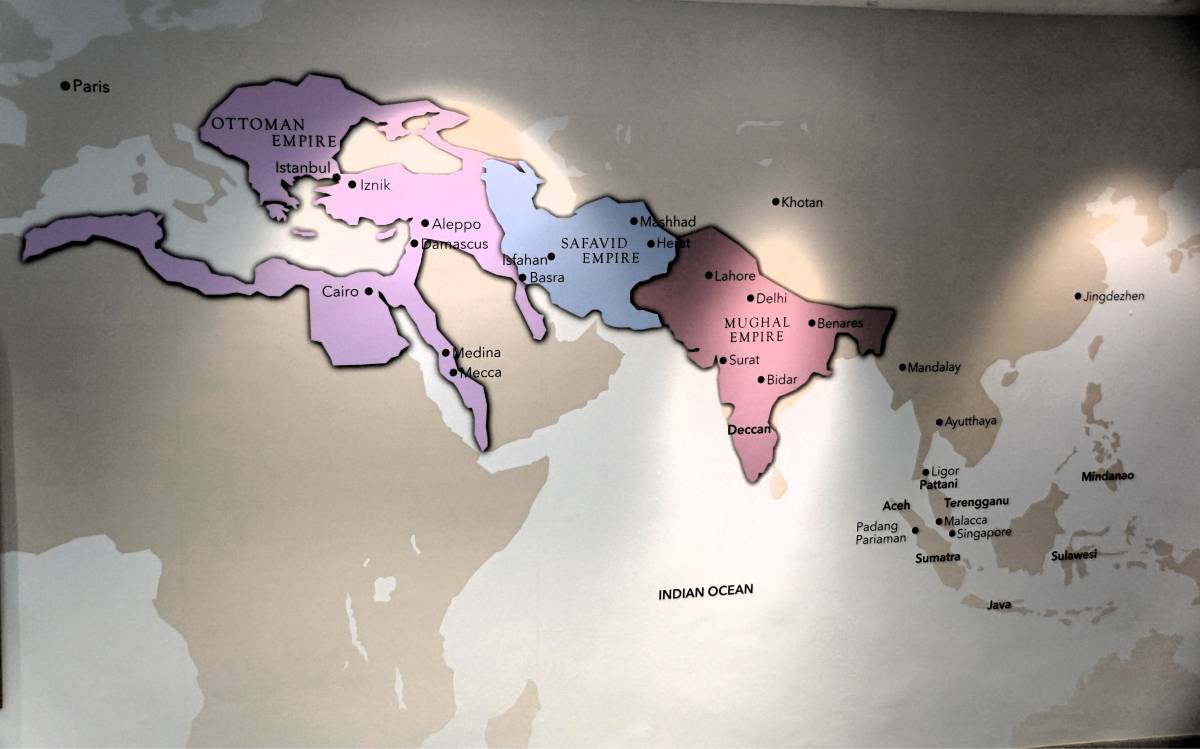
Crosscurrents: Masterpieces of Mughal, Safavid, and Ottoman Art from the Musée du Louvre runs from 19 June 2026 to 24 January 2027. Bringing together 100 masterpieces from the Louvre’s Islamic art collection alongside 30 works from ACM, the exhibition traces how trade, diplomacy, migration, and artistic exchange shaped a cosmopolitan world stretching from Istanbul and Isfahan to Delhi and Southeast Asia.

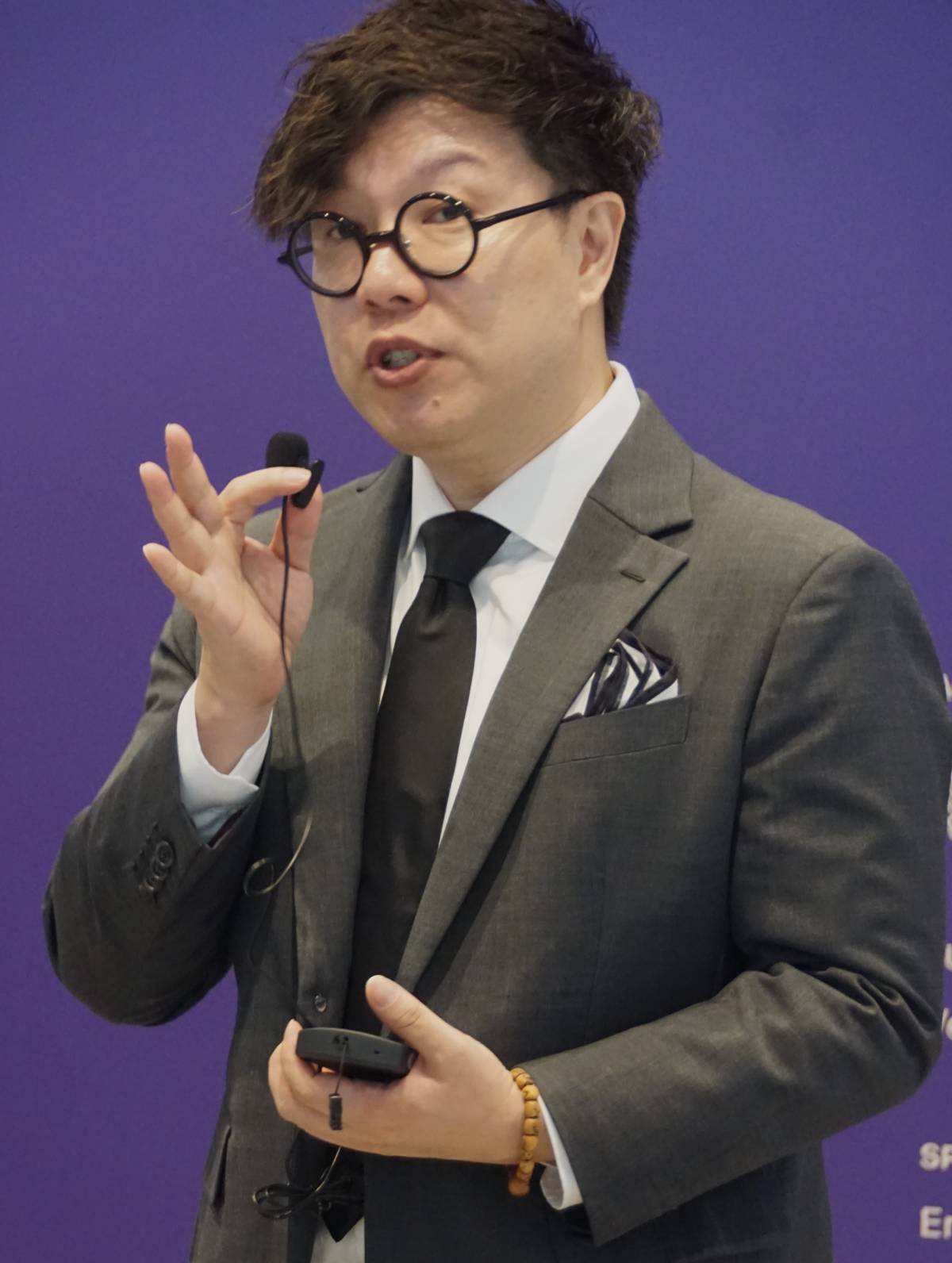
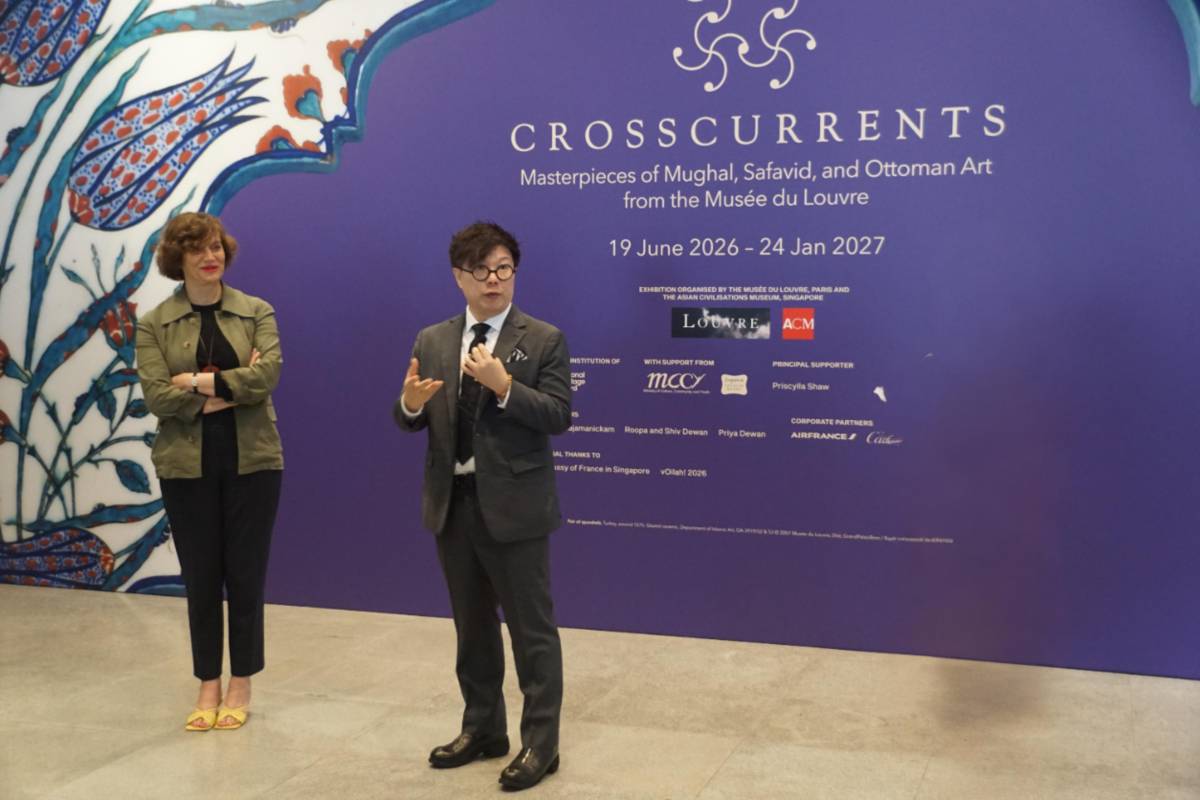
Souraya Noujaim Director of the Department of Islamic Arts at the Musée du Louvre in Paris and Mr Clement Onn, Director of ACM and the Peranakan Museum
Mr Clement Onn, Director of ACM and the Peranakan Museum before the official opening stated, “This partnership with the Louvre brings some of the world’s finest works of Islamic art to Singapore, many of them on view in Southeast Asia for the first time. By placing these works in conversation with objects from ACM’s own collection, the exhibition highlights the artistic and cultural connections that have linked Southeast Asia with the wider Islamic world over many centuries. It also brings Southeast Asia more clearly into view within this larger story, showing the region’s important place in the trade, diplomatic, and cultural networks that connected Asia across vast distances. We are especially honoured that the exhibition opens at the same time as the signing of the Singapore-France Roadmap on Cultural Cooperation, which underscores the important role museums like ACM can play as platforms for international collaboration and cultural exchange.”

Mr Christophe Leribault, President-Director of the Musée du Louvre was unable to attend but in a written statement noted, “Crosscurrents interweaves a hundred masterpieces from the Louvre museum with the ACM’s collections, creating a compelling conversation between objects and artworks, and highlighting the artistic circulations across Asia, between the 16th and the 18th centuries. Taking the Safavid, Ottoman and Mughal worlds as its focus, it examines the cosmopolitan world that connected Istanbul, Isfahan, Delhi and the Southeast Asian region through all kinds of currents – whether commercial, diplomatic, migratory, or artistic.”
Souraya Noujaim Director of the Department of Islamic Arts at the Musée du Louvre in Paris explained that the galleries where these pieces normally are in in the Louvre is undergoing renovation making the artefacts available to travel. “These shared histories are embodied in the remarkable diversity of the objects on display, many of which are exhibited here for the first time in Singapore. I am thrilled that this project launches a strong partnership between our two institutions, united by a shared commitment to understanding art as a universal dialogue.”

Art Across Empires
Between the sixteenth and eighteenth centuries, the Mughal, Safavid, and Ottoman empires emerged as major artistic and cultural centres, shaped by powerful currents of movement and exchange. Artists across these empires blended influences from China to Europe, creating distinctive visual languages that produced some of the finest works of Islamic art.

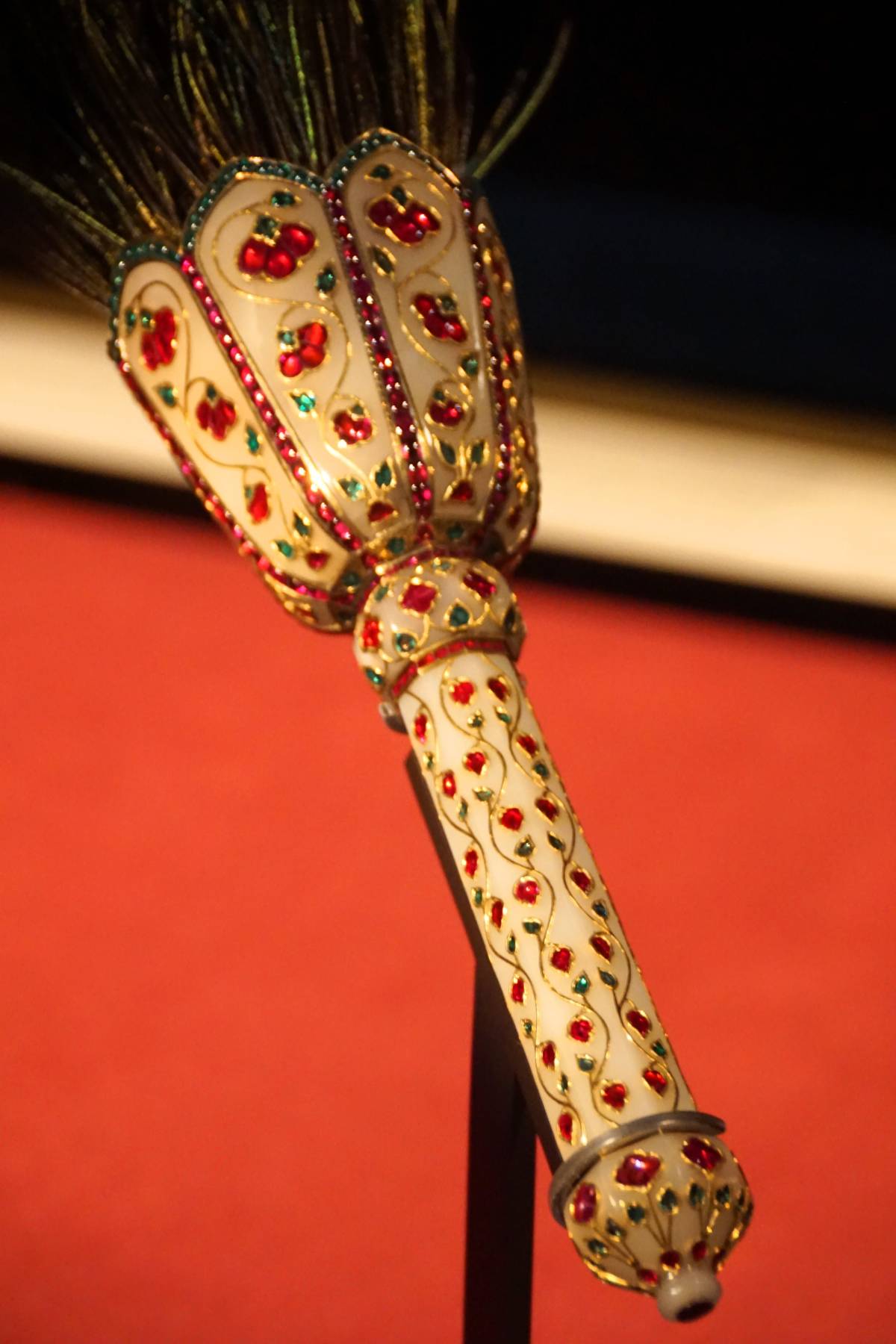
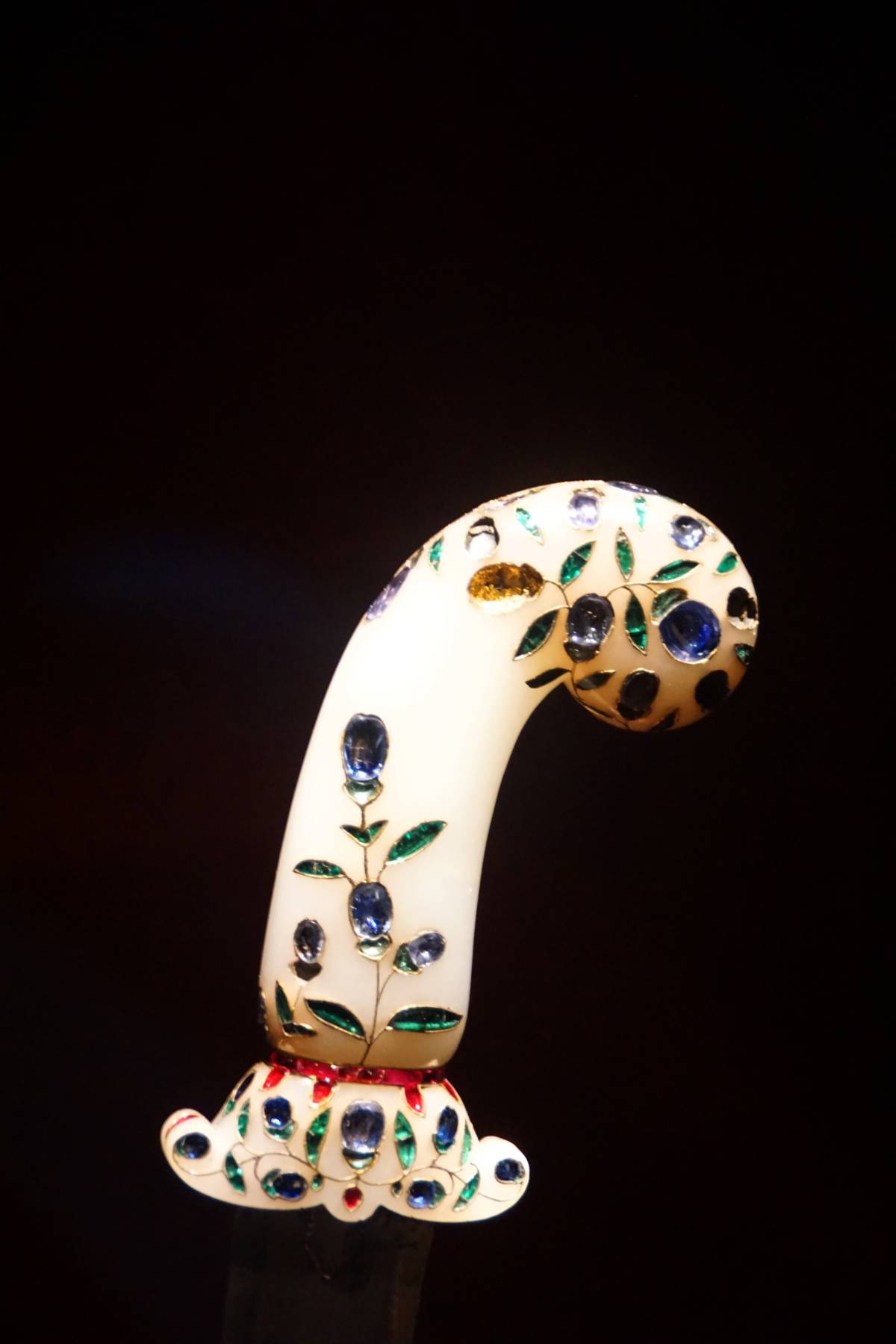
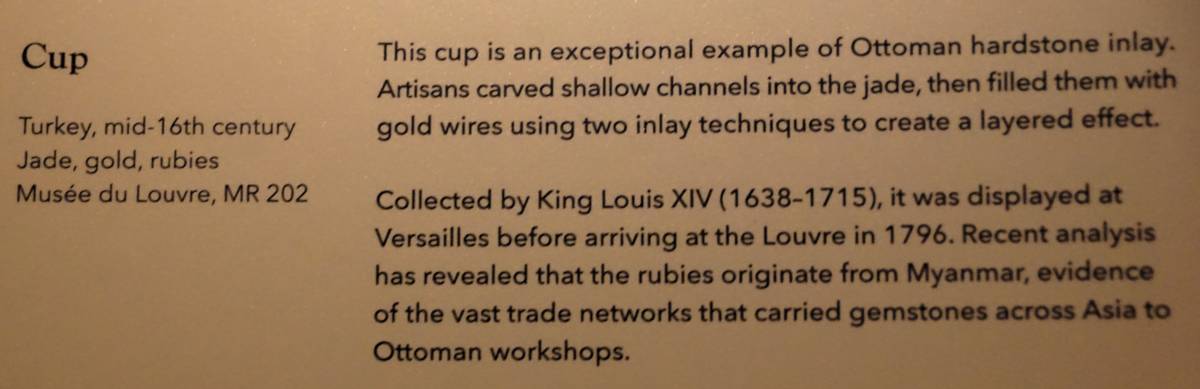
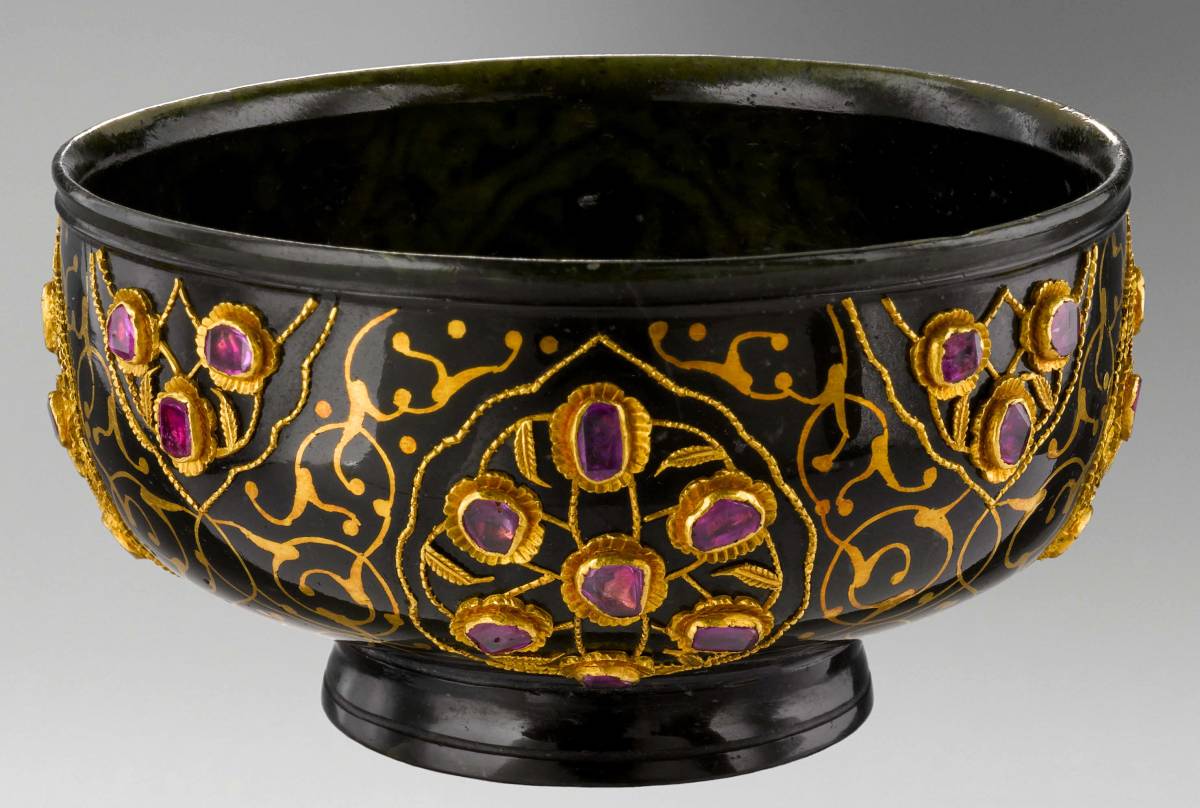
Among these masterpieces is an Ottoman jade cup from the royal collection of Louis XIV, which was displayed at the Palace of Versailles before entering the Louvre in 1796. Inlaid with rubies originating from Myanmar, it reflects the far-reaching networks that linked Southeast Asia, Ottoman workshops, and European royal collections. Such objects also reveal how the Louvre’s Islamic art collection developed through centuries of collecting, diplomacy, and royal patronage.
Cup. Turkey, mid-16th century. Jade, gold, rubies.
Department of Islamic Art, MR 202 © 2009 Musée du Louvre, Dist. GrandPalaisRmn / Hughes Dubois

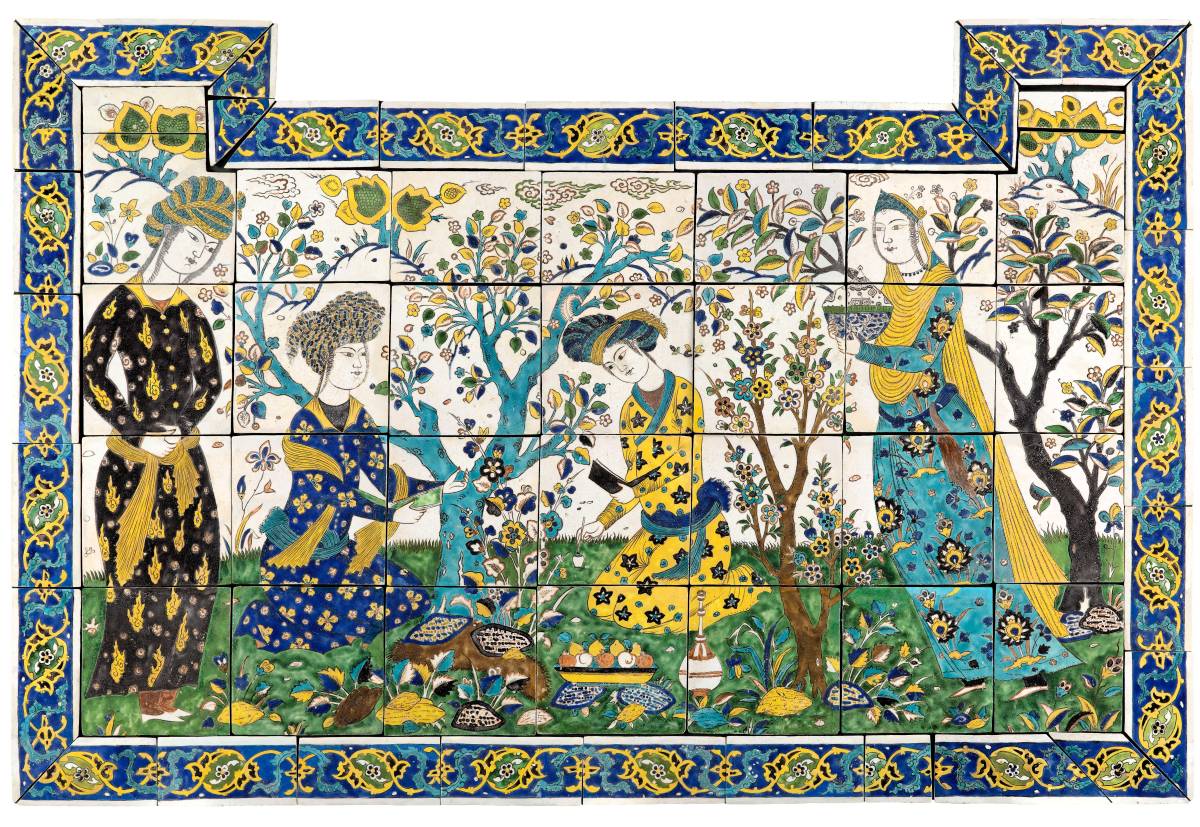
Starting in the Islamic Art Gallery on Level 2, the exhibition explores how courtly life and artistic production in Mughal India and Safavid Iran developed alongside expanding trade routes. A mother-of-pearl ewer and basin from Mughal India showcases the luxury arts of the Indian Ocean world, destined for royal courts and elite patrons throughout Asia and Europe, while a monumental tiled panel from Safavid Iran offers a glimpse into the literary culture and intellectual life that flourished in Isfahan. Beyond Iran, Persian storytelling traditions, language, and aesthetics travelled eastwards, leaving lasting impressions across Southeast Asia.

Tiled panel with poetry contest. Iran, mid-17th century. Glazed ceramic. Department of Islamic Art, OA 3340 © 2012 Musée du Louvre, Dist. GrandPalaisRmn / Raphaël Chipault.
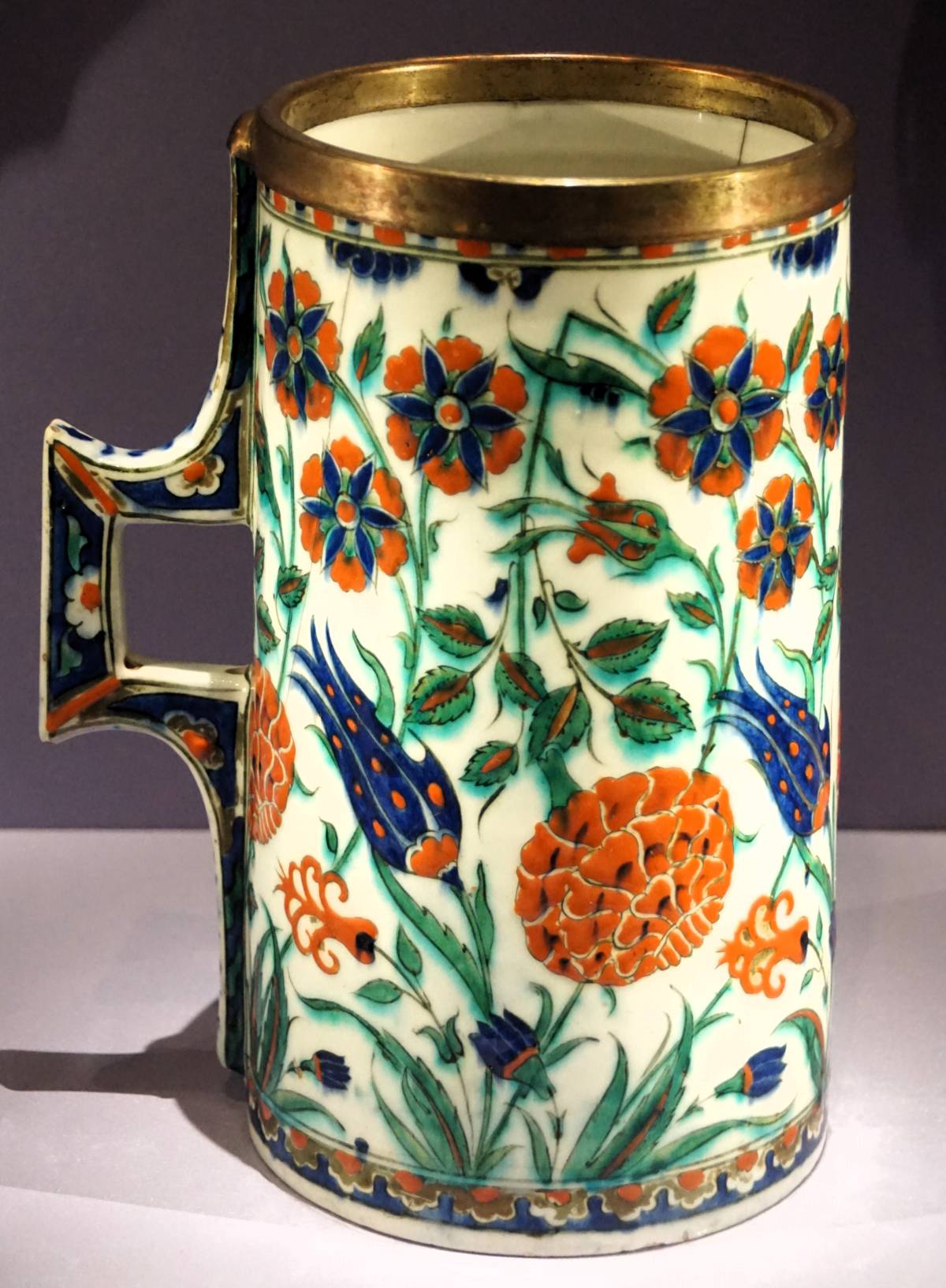
These currents of exchange continue in the Level 3 Design Gallery, where works from the Ottoman world, its provincial centres such as Cairo and Damascus, and Southeast Asia reveal how artistic forms were adapted and transformed in different cultural settings. A brass and copper mosque model from West Sumatra, for example, shows how Ottoman and Mughal architectural forms were adapted in Southeast Asia to signal a cosmopolitan Islamic identity. Iznik ceramics likewise illustrate artistic exchange on a global scale. Responding to imported Chinese porcelain, Ottoman potters developed a vibrant palette and decorative vocabulary of their own. Some ceramic forms also drew on contemporary metalwork, demonstrating how ideas moved not only across regions but between mediums.


Connections across Asia and beyond
Southeast Asia remains underrepresented in global narratives of Islamic art, despite the region’s long and rich history of exchange with the wider Islamic world. Crosscurrents brings together works from the Louvre and ACM to explore these shared histories and connections across Asia. The exhibition marks a significant moment in cultural exchange between two world-renowned institutions, offering fresh perspectives on familiar objects and reaffirming ACM’s commitment to presenting Asia’s heritage through stories of exchange, movement, and encounter that continue to resonate today.

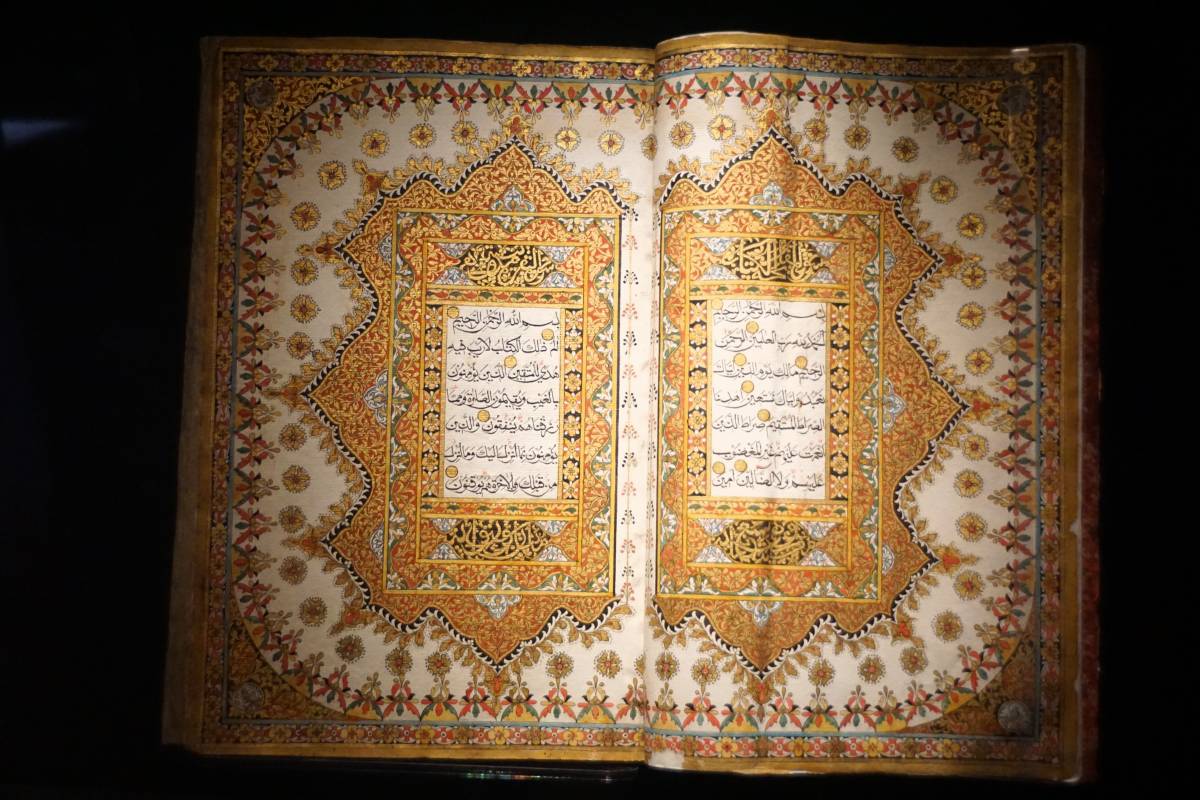
Made by hand Quran - ACM collection
Singapore-France Roadmap on Cultural Cooperation
The launch of Crosscurrents presents the occasion of the signing of the Singapore-France Roadmap on Cultural Cooperation, by Ms Teoh Zsin Woon, Permanent Secretary of the Ministry of Culture, Community and Youth (MCCY), and His Excellency Stephen Marchisio, Ambassador of France to Singapore. The Roadmap underscores both countries’ shared commitment to deepening cultural ties and fostering meaningful exchanges between our cultural agencies, museums and institutions, building on the strong and longstanding bilateral relationship between Singapore and France.
Crosscurrents: Masterpieces of Mughal, Safavid, and Ottoman Art from the Musée du Louvre runs from 19 June 2026 to 24 January 2027 at ACM. General museum admission applies. For details, visit https://www.nhb.gov.sg/acm.
Follow @acm_sg | www.facebook.com/asiancivilisationsmuseum
ORDER HERE: fcowanmedia@gmail.com : Or go to Amazon: The Orange Sofa: Unicorn Eyes: Walking Home: Singapore Circuit Breaker. Zero Visibility - The Rescue of the Thai Football Team trapped in the cave in Northern Thailand