
2025 Land-Sea Economic Forum held in Singapore
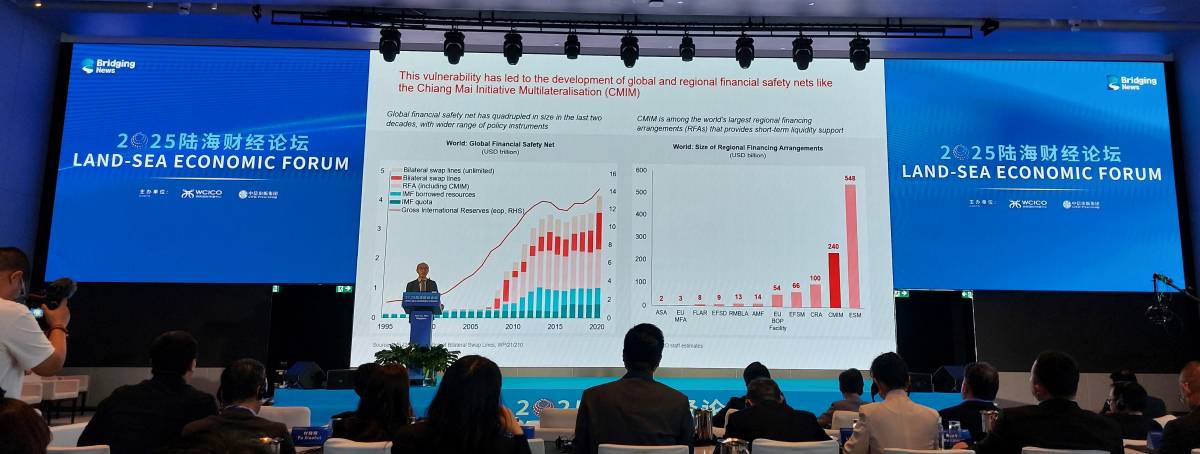
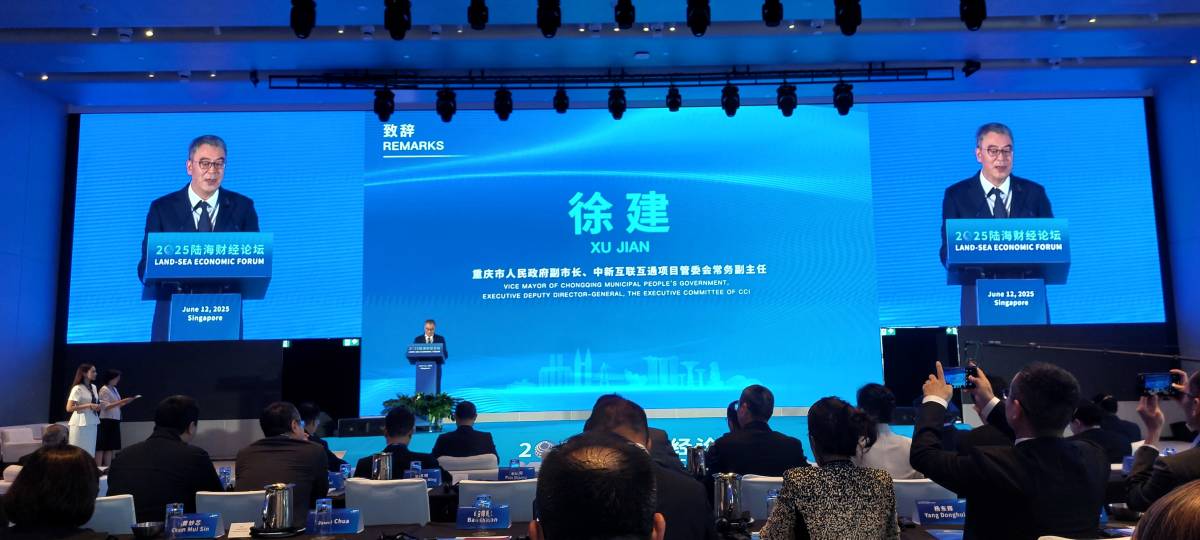
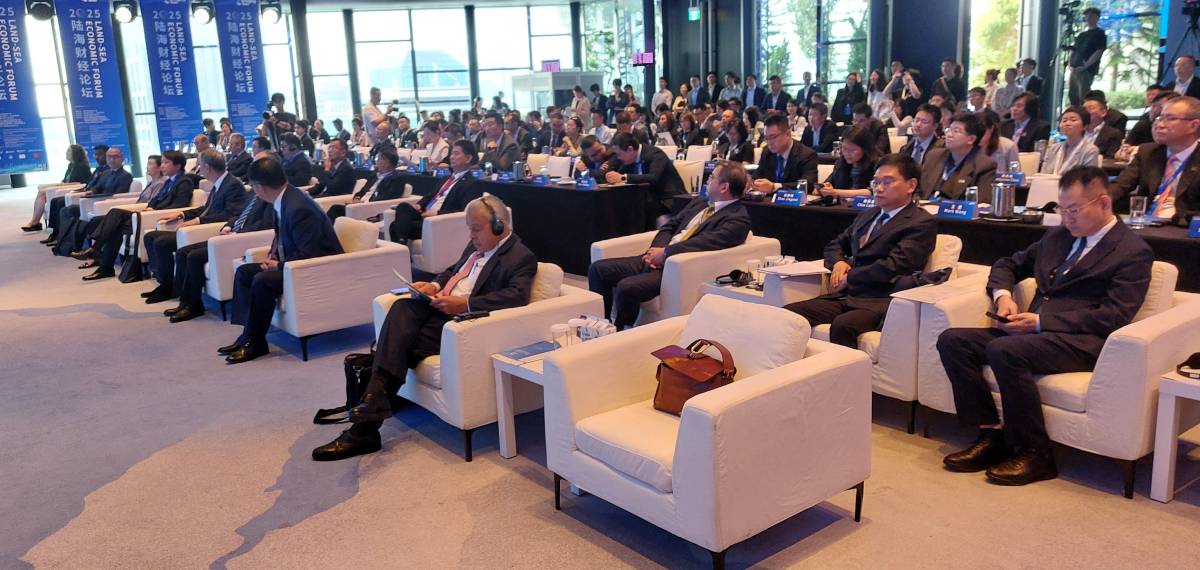
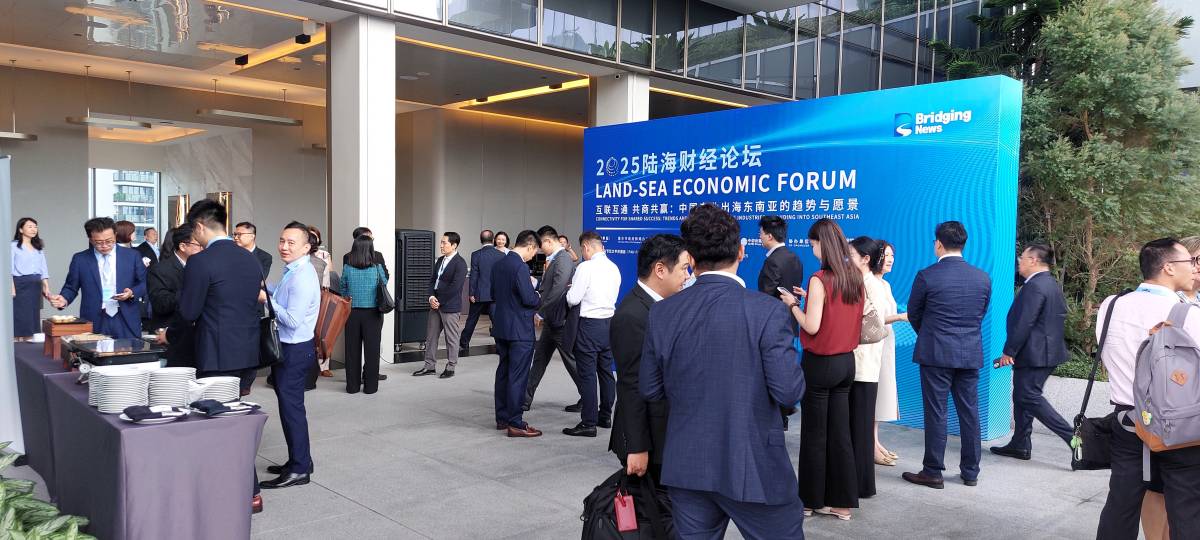
(Singapore June 12, 2025) The 2025 Land-Sea Economic Forum, held 12 June at Pan Pacific Orchard, focused on the theme: Connectivity for Shared Success: Trends and Visions for Chinese Industries Expanding into Southeast Asia. Initially planned for 120 participants, the event attracted more than 170 guests that included government officials from China, Singapore and Malaysia.
The forum brought together stakeholders from various countries to discuss economic development and cooperation. CITIC Press Group and WCICO the co-organizers, demonstrated their shared commitment to promoting international understanding and collaboration.

In his Opening Remarks H.E. Mr Xu Jian, Vice Mayor of Chongqing Municipal People’s Government, Executive Deputy Director-General, the Executive Committee of CCI noted the 10th anniversary of the CCI and highlighted the conference's role in fostering cooperation between Western China and ASEAN. He also highlighted its role in reflecting strong interest and active participation from financial institutions on both sides, exploring new partnerships and cross-border financing deals.
The Vice Mayor stated that Chongqing is the fulcrum for Western Chinese development with high economic growth momentum. It has 31 manufacturing segments and is second in car manufacturing in China and makes smart phones. Singapore, he said is a hub gateway for Chinese businesses to go overseas. We wish to take economic cooperation to a higher level with Chinese businesses to expand into SE Asia. We want to know how to breakthrough with win win results.
 H.E. Mr.Cao Zhongming, Ambassador Extraordinary and Plenipotentiary of the People's Republic of China to Singapore pointed out that China has Land sea corridors with 127 countries and regions.
China and Singapore has a natural shared destiny. The two countries enjoy cultural similarities, shared philosophy, integrated interests and complementary advantages. He talked about the Belt and Road initiative that benefits two billion people and promotes economic integration. The formal signing of the agreement to create Free Trade Area 3.0 will benefit businesses in the region.
Ng Ming Liang, Vice President of the Global Enterprises Division at the Singapore Economic Development Board said, “In a few short years the Chinese Digital economy has developed quickly.
With strategies to enhance Singapore businesses Chinese business have chosen Singapore as a nod for expanding into SE Asia and the world. We have a high quality, mutual trust relationship.
Many Chinese brands have been well received in Singapore and it has become very important to China’s industries as a base to broaden and grow.
What can Singapore bring? he asked. A Stable political environment that attracts enterprises. It has
the most efficient port in the world that supports huge logistic flow. 90% of ships clear customs in eight minutes. It helps SE Asia move into the world.
Duan Jiaqiang, Vice Chairman/President/Deputy Party Secretary at Citic Press Corp stated that Publishing makes important contributions to the economy. It has great potential to promote economic expansion overseas. “We publish high quality books on topics such as Going Global Strategies. We do in-depth research and gain insight into market trends. We have introduced Lee Kuan Yew to readers in China and have provided Chinese readers with new experience. We will launch more excellent works that will promote win - win results.
Chen Jin chairperson of Chongqing Daily News Group noted the 35th anniversary of developing economic relationships between Singapore and China. We have invited many leaders from Singapore to China to discuss how we improve the connectivity between China and SE Asia.
We are exploring ways to internationalize. Chongqing was the first city to develop regional economic cooperation and impower digital and media expansion and encourage innovation. We will try to be a good channel to understand Chongqing.

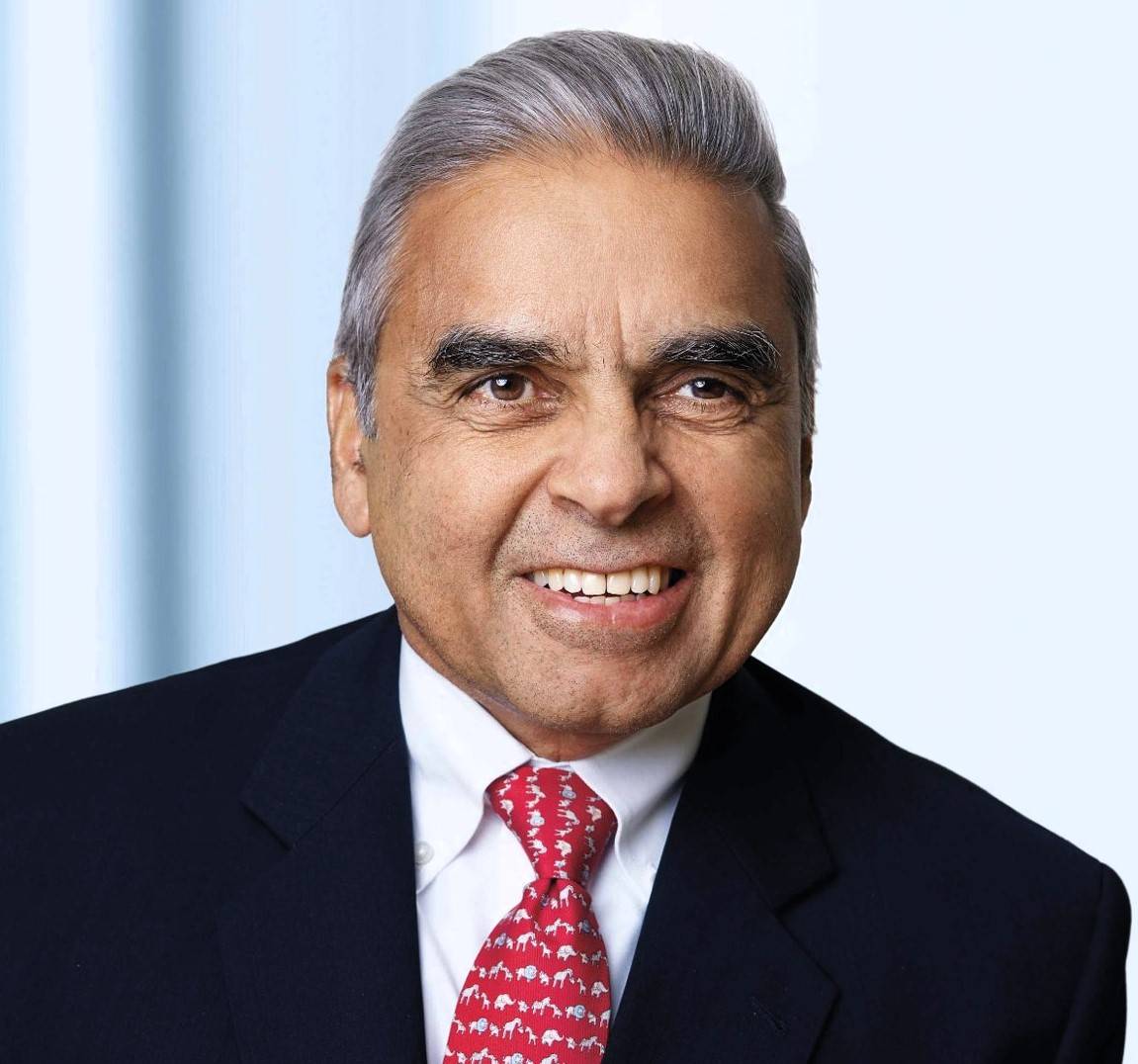
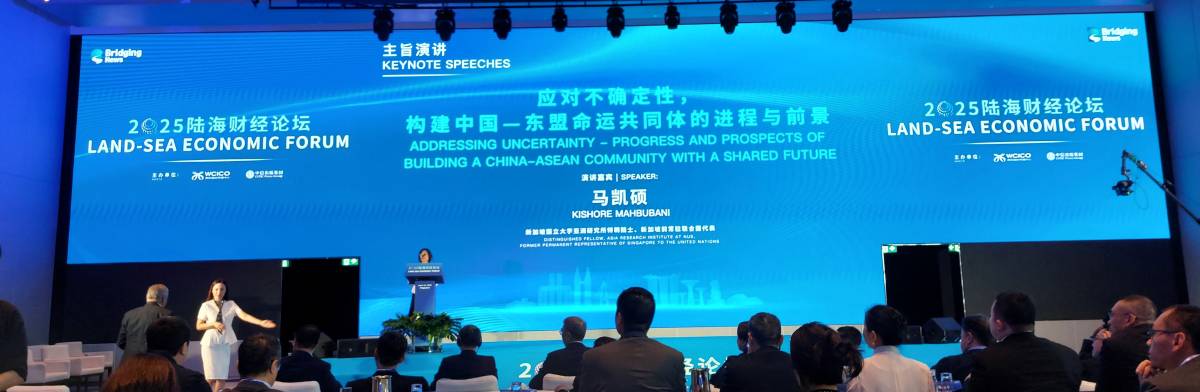
In his Keynote Speech “Addressing Uncertainty – Progress and Prospects of Building a China-ASEAN Community with a Shared Future NUS Prof Kishore Mahabubani began: “This forum is very timely because we live in an amazing time. Historians of the future will look at our time and say that the world has turned upside down. I am not exaggerating.
Kishore Mahbubani PPA is a Singaporean diplomat and geopolitical consultant who served as Singapore Permanent Representative to the United Nations between 1984 and 1989, and again between 1998 and 2004, and President of the United Nations Security Council between 2001 and 2002. After stepping down, he bec ame a senior advisor at the National University of Singapore. He is currently a Distinguished Fellow at the Asia Research Institute.
He explained why the world is now upside down. “Forty years ago, the US and its allies were champions of free trade. China and India were not yet opening up and were very much closed off. On 9th October 1984 I accompanied Lee Kuan Yew where he was invited to speak to a joint session of Congress. The world order was beginning to thrive. In the era after WWII, it was a world of peace and much of the credit went to American leadership. They promoted an open and free trading system. Agreements led to huge growth in trade and financing throughout the world. Never have people enjoyed high standard of living.
Today if LKY were alive he could not say what he said in 1985. Forty years ago he warned the US of protectionism. Putting up barriers would set up a chain reaction that would send a downward spiral of the world economy. It was unthinkable that the US should close it's markets. What a bitter irony that would be. Protection would reduce trad and jobs. That is what is happening today. The US refuses to be the champion of an open trading system. Instead, it is blocking trade. PM Lawerence Wong said that on Liberation Day the trading rules based globalization of free trade was over. The US was the anchor for free trade and open economies. President Trump’s tariffs are not reform - it is the rejection of the very system the United States created.
“The rest of the world does not have to follow the same path,” he continued. “A new and different global system can be achieved later. Why has this happened? The answer is complicated. The US government Americans believe that by opening up, Americans lost jobs. So, they are closing shop. It was because of the China Shock.
“Nobel Prize Winner Daron Acemoglu said 2 - 2.4 million jobs were lost in the US and the loss of those jobs impacted the elections in 2016 when Trump was elected. He said that a Democrat would have been elected if China's impact on US economy had been 50% lower. The bottom 50% of the US population has been affected and are disillusioned with globalizations. The US is a plutocracy. The top 10 - 15% benefit from the economy while the bottom doesn't. This has resulted in stagnation for the bottom 50%. The decision of Trump to walk away from free trade is a severe challenge to our global system. Martin Wolf says projected growth will go 2.3% in 2025. Hard to trust in any trade deals now announced.
The importance of this forum is that we must, in a world of closing doors, keep up a region where the doors remain open and connected.
“It is remarkable how successful the ASEAN - China partnership has been. It has grown by an amazing amount. One reason it works so well is because of peace and cooperation. Don't take for granted what ASEAN has achieved. Look at conflicts around the world. Regional co-operation is never easy. SE Asia is by far the most diverse region in the world. By far. SE Asia is designed for conflict - but there have been no wars in 50 years. If ASEAN hadn't become such a successful regional orgazination it couldn't have had this relations ship with China.
“Forums like this to carry the partnership to a higher level. Both sides are succeeding and doing well. In 1980 the EU was 110 time the size of China. Now they are about the same size by 2050 the EU half the size of China. ASEAN will soon be bigger than Japan. This strong partnership is increasingly important in the current global context. There are few relationships you can point to as good examples to follow. He concluded: “This Forum is very timely. I wish you every success.”
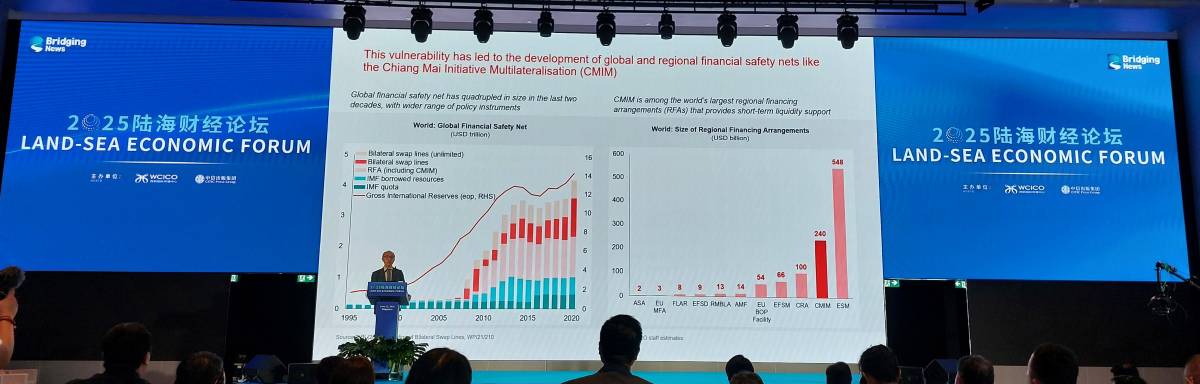
He Dong, Chief Economist at the ASEAN+3 Macroeconomic Research Office (AMRO), presented the "ASEAN+3 Regional Economic Outlook 2025" highlighting the significant and uneven global and regional impacts of increased U.S. tariffs amid rising trade tensions. and analyze how the ASEAN+3 region can reduce dependence on the U.S., leverage domestic demand, and utilize policy space to enhance resilience. ASEAN+3, based in Singapore, is China, Japan and South Korea. “These are tariffs the world has not seen since 1930s. ASEAN is one of the hardest hit. Even with 90-day pause we still face uncertainty. This level of uncertainty likely to persist for some time to come. Regional growth may slip below 4% this year.”

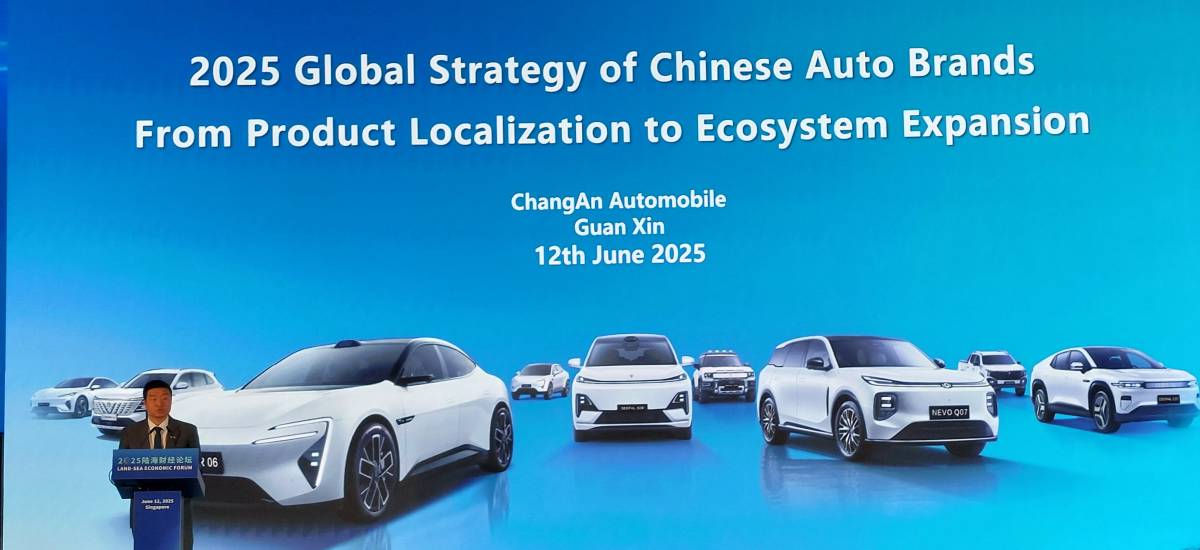
Guan Xin, Vice President of Changan Auto Southeast Asia Co., Ltd., presented on "Globalization Strategies for Chinese Automobile Brands in 2025: From Product Localization to Ecosystem Expansion," outlining the upgraded path for Chinese automakers' ecosystem-driven globalization.
“China's auto exports are booming,” he stated. “Gasoline power vehicles are still the dominate forms. Chinese car brands are transitioning form simply exporting products to exporting a comprehensive ecosystem.
China’s challenges not only from US tariffs but EU Tariff Barries as well. Chinese manufacturers are responding with a Strategy of Localization, Regional Supply Chains and Strategic Partnerships to offset Tariff Impact. We are building regional production chains.

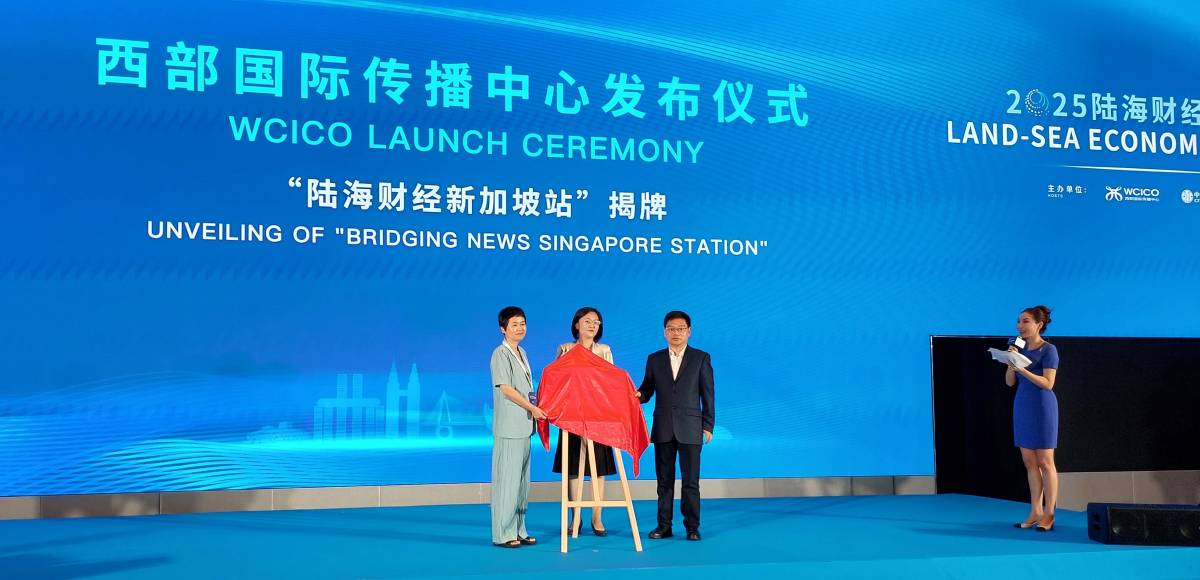
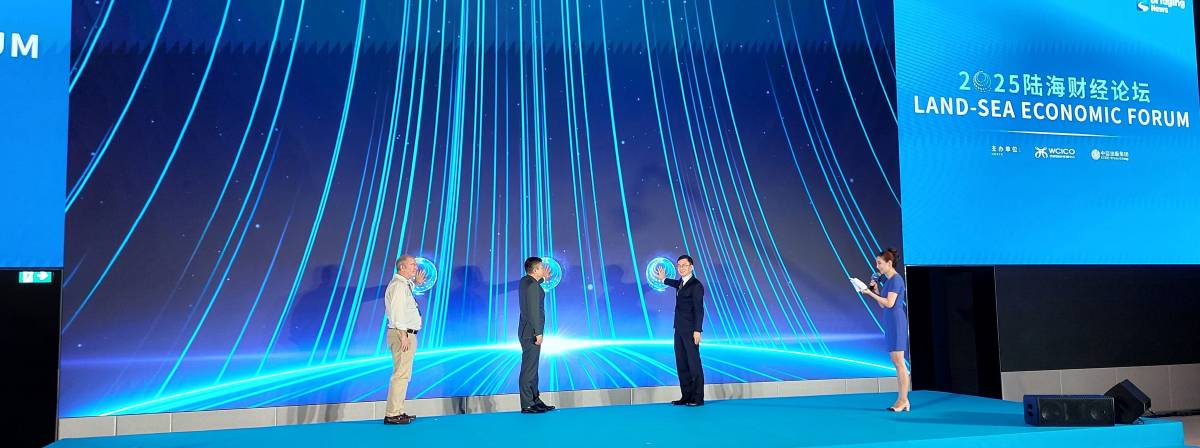
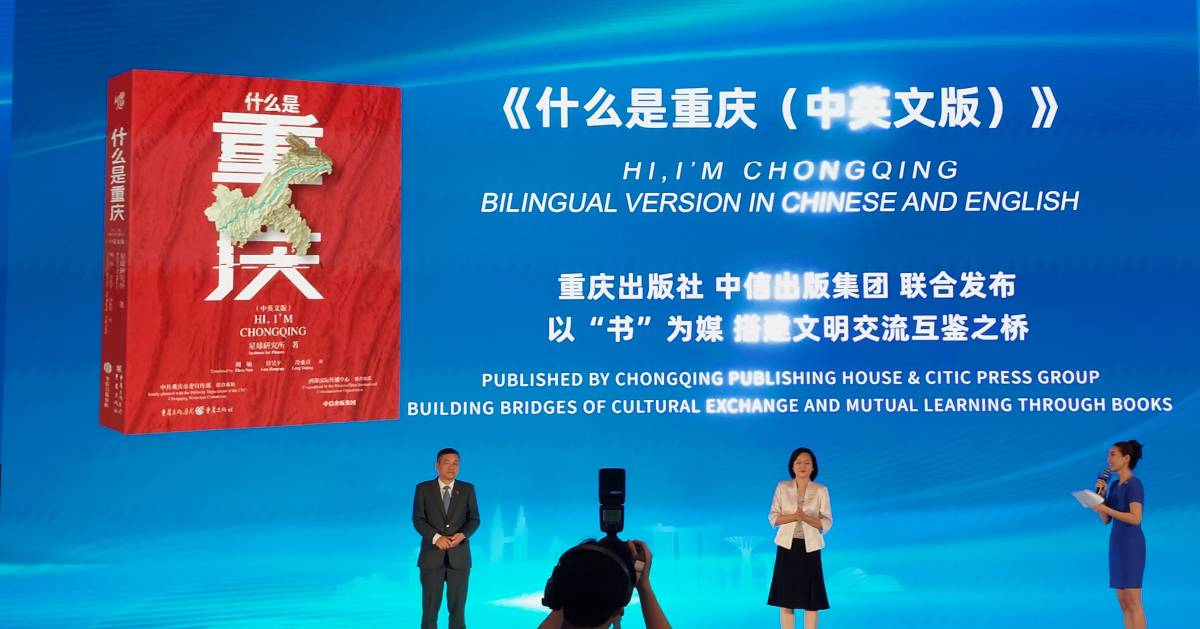
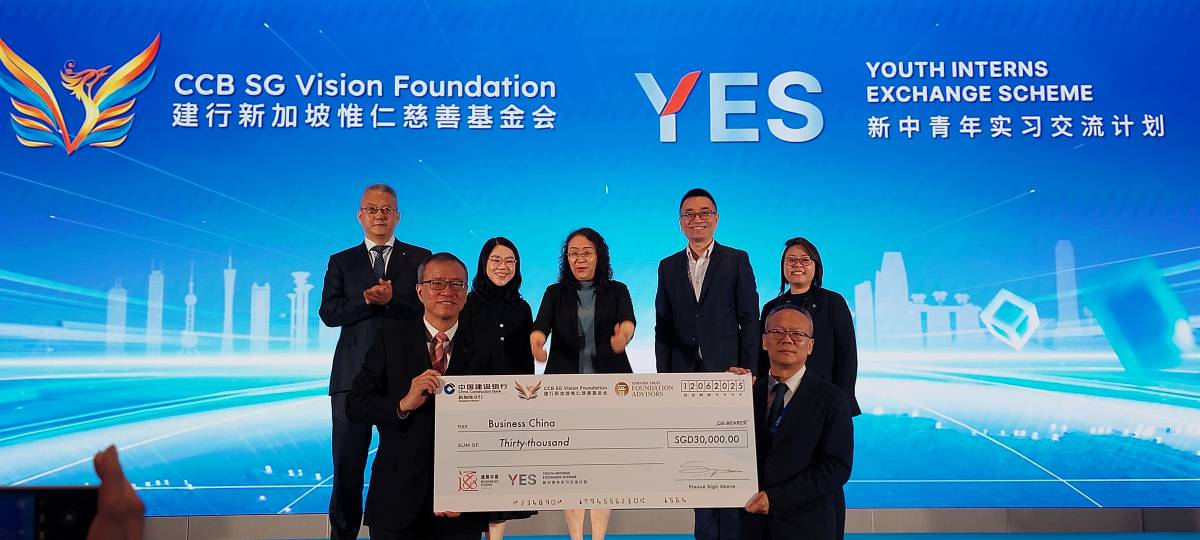
Series Release and Signing Ceremonies were held with the launch of the book Hi I'M Changan, the unveiling of “Bridging News Singapore Station” by WCICO and CCB Singapore Launch Ceremony of CCB Singapore Vision Foundation inauguration.


Tracey Chang, once a news anchor and reporter for CCTV News moderated two of the three Roundtable Sessions. Participants for the session ‘AI Empowered Cross Border E-Commerce Driving Brand Globalization’ were Daniel Chua Head of Commercial at SEA WorldFirst, Ant International; Mark Wang, General Manager of Solutions and Customer Success, Tencent Smart Retail and Life Industries and Li Mi Chief of Staff & CMO, Advance Intelligence Group. A main point they all agreed on was that ease of cross boarder payment is essential for cross boarder commerce.

Robin Liu, Vice President and CMO of MiniSo; Xiang Juany Head of Overseas Business Centre, Tencent Video, Wang Li, Vice President, General Manager of Overseas Business Department, CongQing Maiya Media and Berri Lyu, Director, LightSpeed, Singapore Office discussed ‘New Opportunities and Challenges In Cultural Export’. They examined new approaches to integrating China-ASEAN cultural consumption. They all agreed that in the past 10 years the quality of China’s products have improved in quality. Localization is important to creating products that will be of interest to people outside of China and will help develop branding and messaging to sell them.
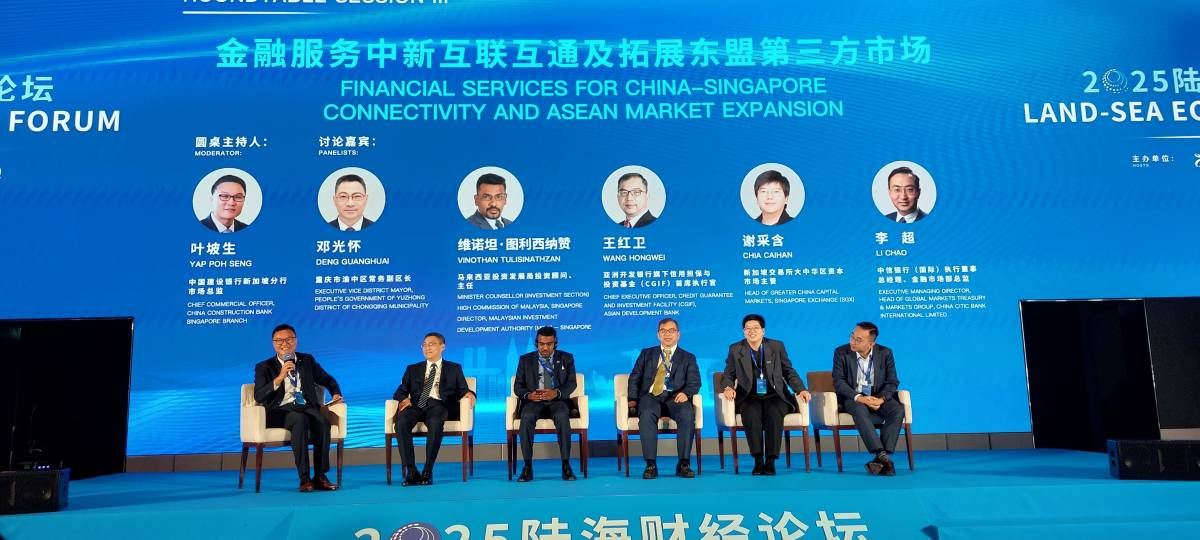
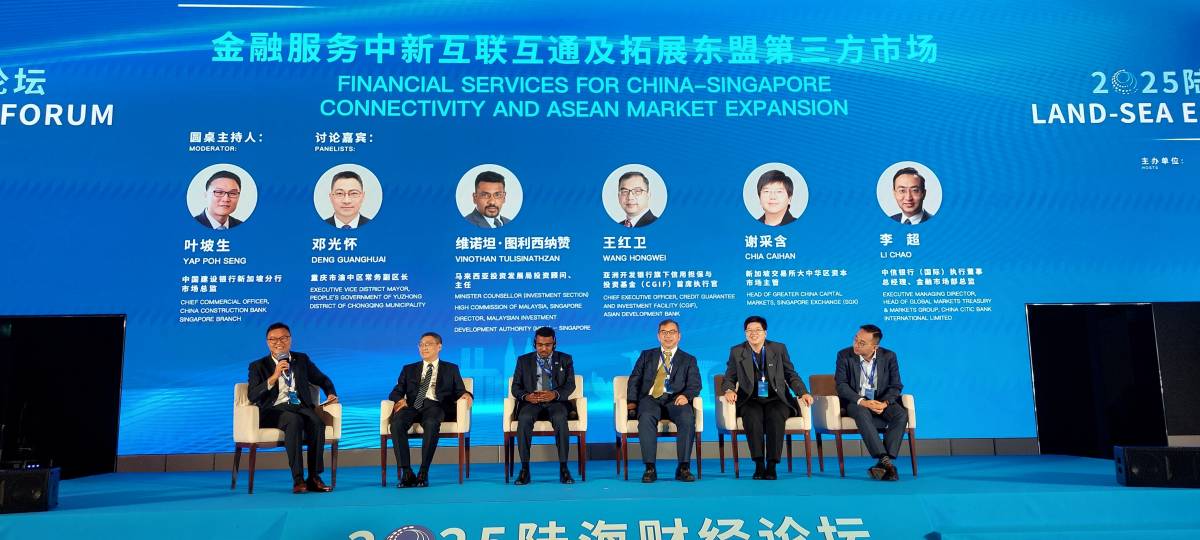
The "Financial Services for China-Singapore Connectivity and ASEAN Market Expansion" roundtable was moderated by Yap Poh Seng, Chief Commercial Officer, China Construction Bank, Singapore Branch. Deng Guanghauai, Executive Vice District Mayor, People’s Government of Yuzhong District of Chongqing Municipality; Vinothan Tulisinathnzan, Counsellor, Investment/Director Malaysian Investment Development Authority (MIDA); Wang Hongwei CEO Credit Guarantee and Investment Facility, Asian Development Bank; Chia Chaihan, Head of Greater China Capital Markets, Singapore Exchange and Lia Chao, Executive Managing Director CITIC Bank examined how financial services can facilitate regional expansion for Chinese and Singaporean businesses.

Speaking about tariffs a main point was that they force companies to invest in this region. Deng Guanghauai said they are a reality that cannot be avoided. Their impact is very high. Market demand is shrinking. Internation trade shrinking and there is A lot of uncertainty. Thee is a need to accelerate policy so that businesses in trade can survive. Trade structures have to be adjusted. Yap Poh Seng stated that in Game Theory, cooperation is best way to win.