

Sabah Agriculture Park is Beautiful, Informative and Interesting
Many activities are available to do in and around the park
Floyd Cowan Words & Photos
(Tuesday 10 March 2026) We said goodbye to Tham Yau Siong at Padas Farmstay after breakfast on our way to Sabah Agriculture Park. I was travelling with Hisyam Azmi, Marketing Manager at Sabah Trade & Tourism Office Singapore (STTOS) and Satnoheadsot (Sat) our very engaged local guide. Roslan was at the wheel.
The evening before, on the outskirts of Tenom, we saw an immense flock of egrets rise up over the water. When I pointed them out to Sat, despite his being Sabah born and raised, admitted he’d never seen a flock that large. When I travel in Sabah, I often feel the entire Malaysian state is a park. A little wild in places, very urban in other, but always beautiful.
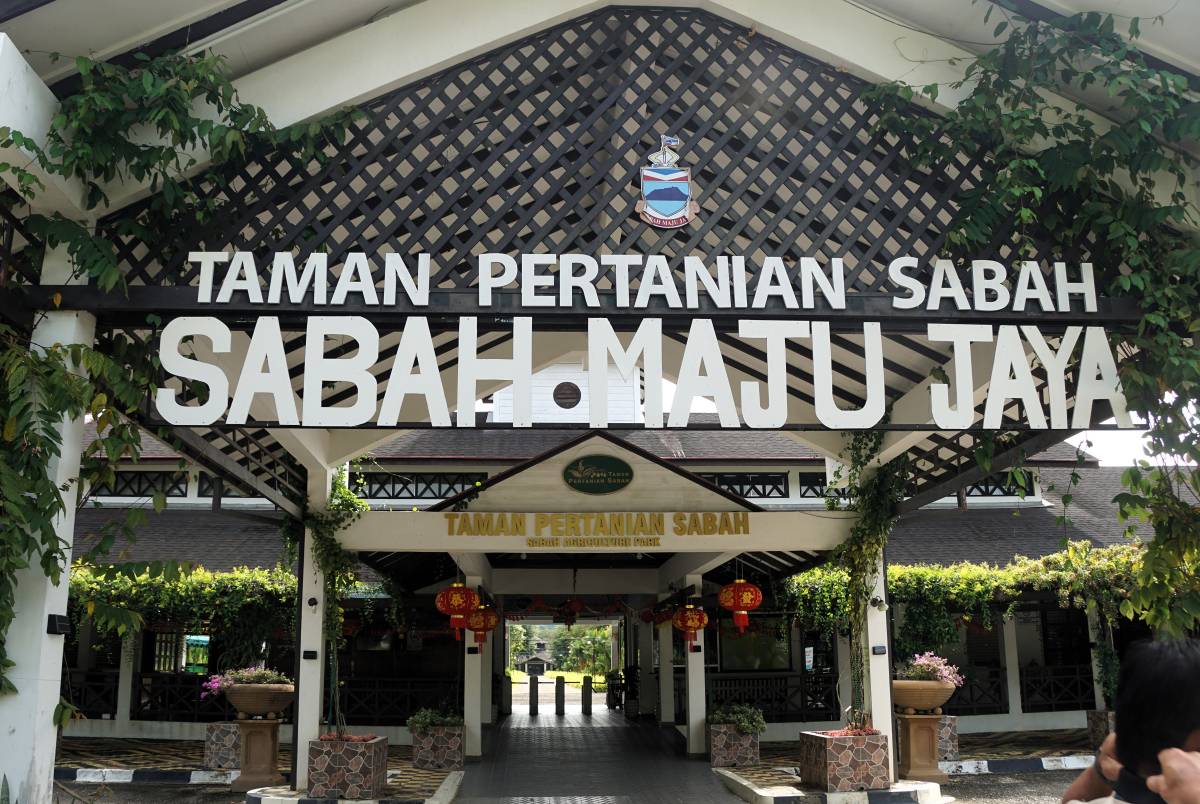
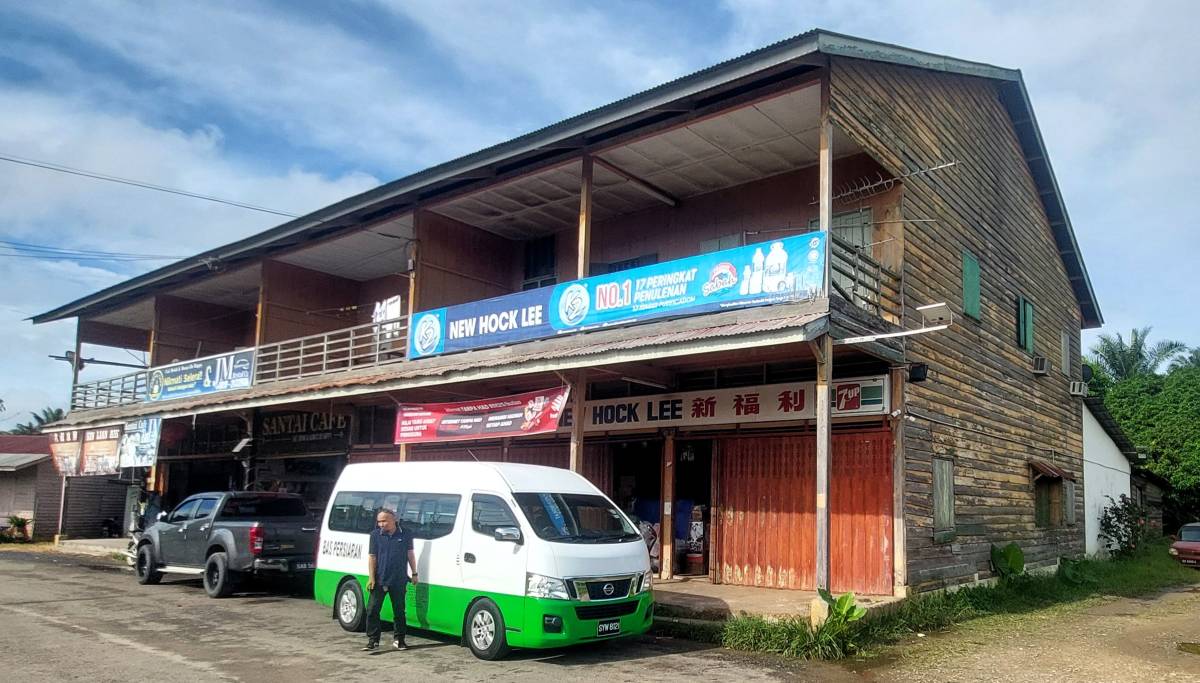
Leaving the Padas Farmstay we headed north to the Sabah Agriculture Park about 15 to 20 minutes north of Tenom. Along the highway, at about the same place we spotted the mega flock of egrets, is the only remaining British Government building in Tenom. It was built in the mid‑1920s during the British North Borneo period. Tenom was known as Fort Birch from the late 1800s into the 20th century.

The only remaining British era Government building in Tenom
There are other buildings remaining from the British era, such as the railway station, that were not government buildings. Most of the British buildings like police stations, rest houses and estate buildings, were either destroyed during WWII, replaced, or heavily rebuilt and did not survive to today.

Viana, Assistant Agricultural Officer
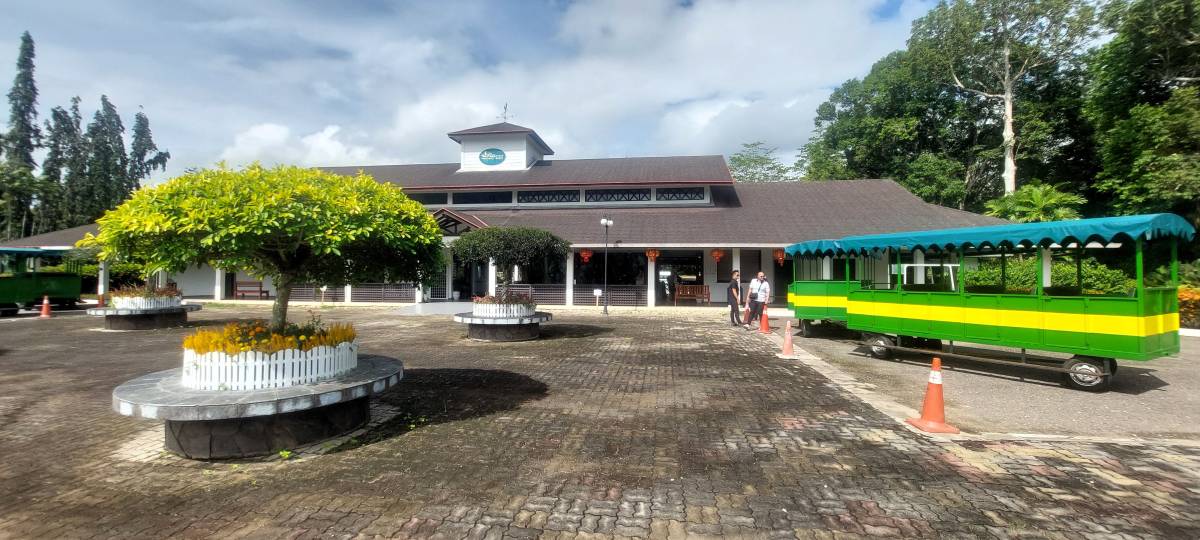
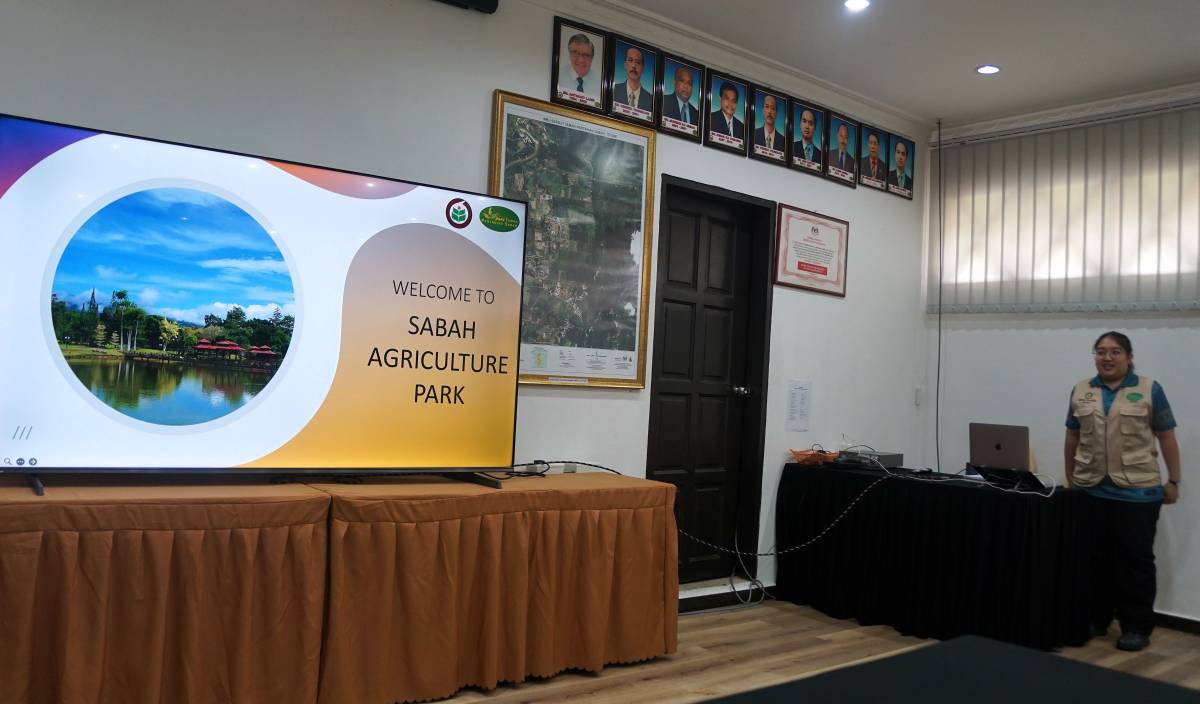
We stopped long enough to be a bit late arriving at Sabah Agriculture Park where we were warmly greeted by staff who were waiting for us. Viana, Assistant Agricultural Officer, lead us upstairs to a meeting room where she gave us a presentation on the park.
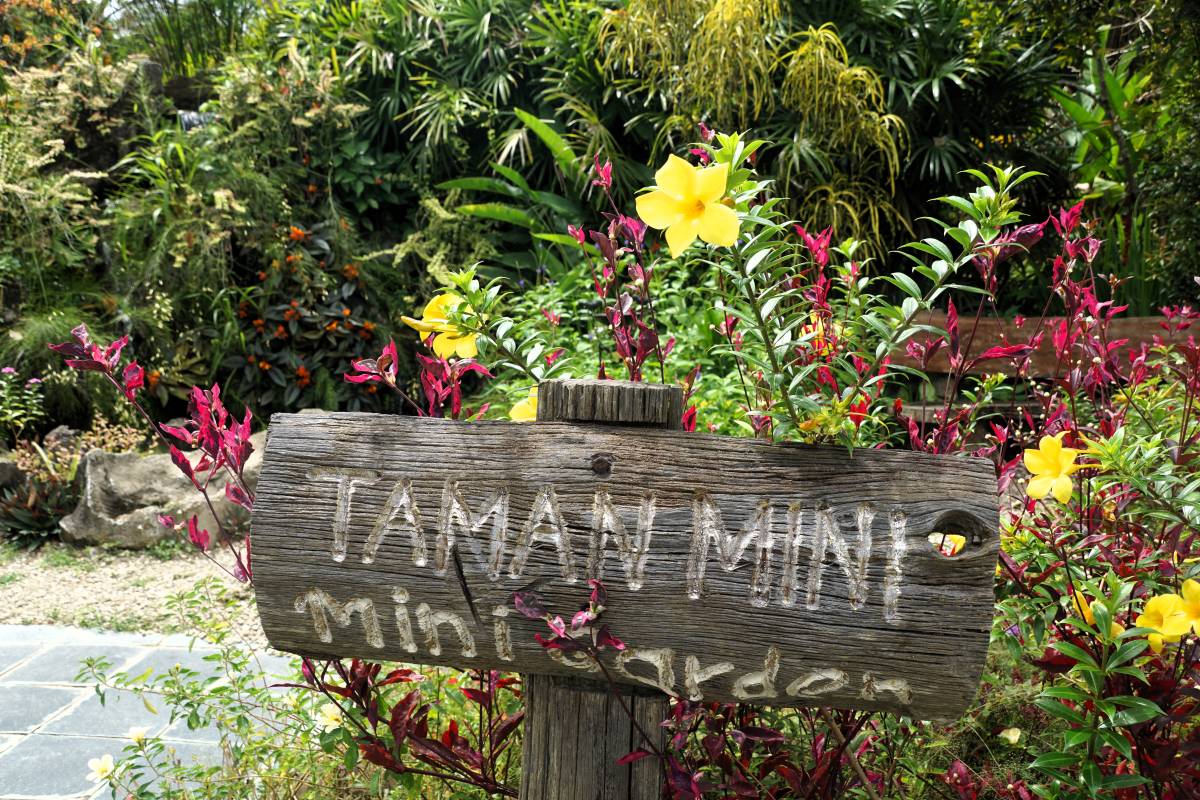
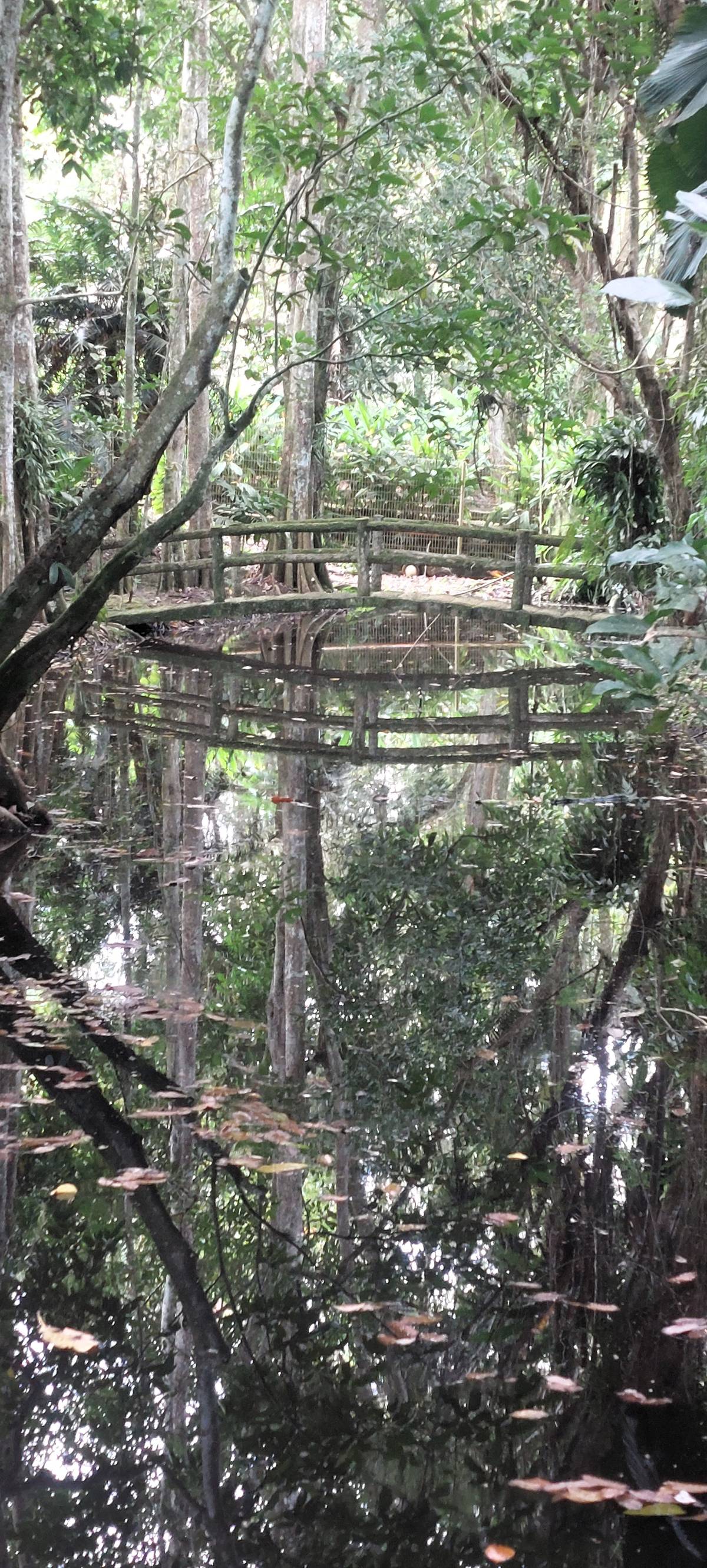
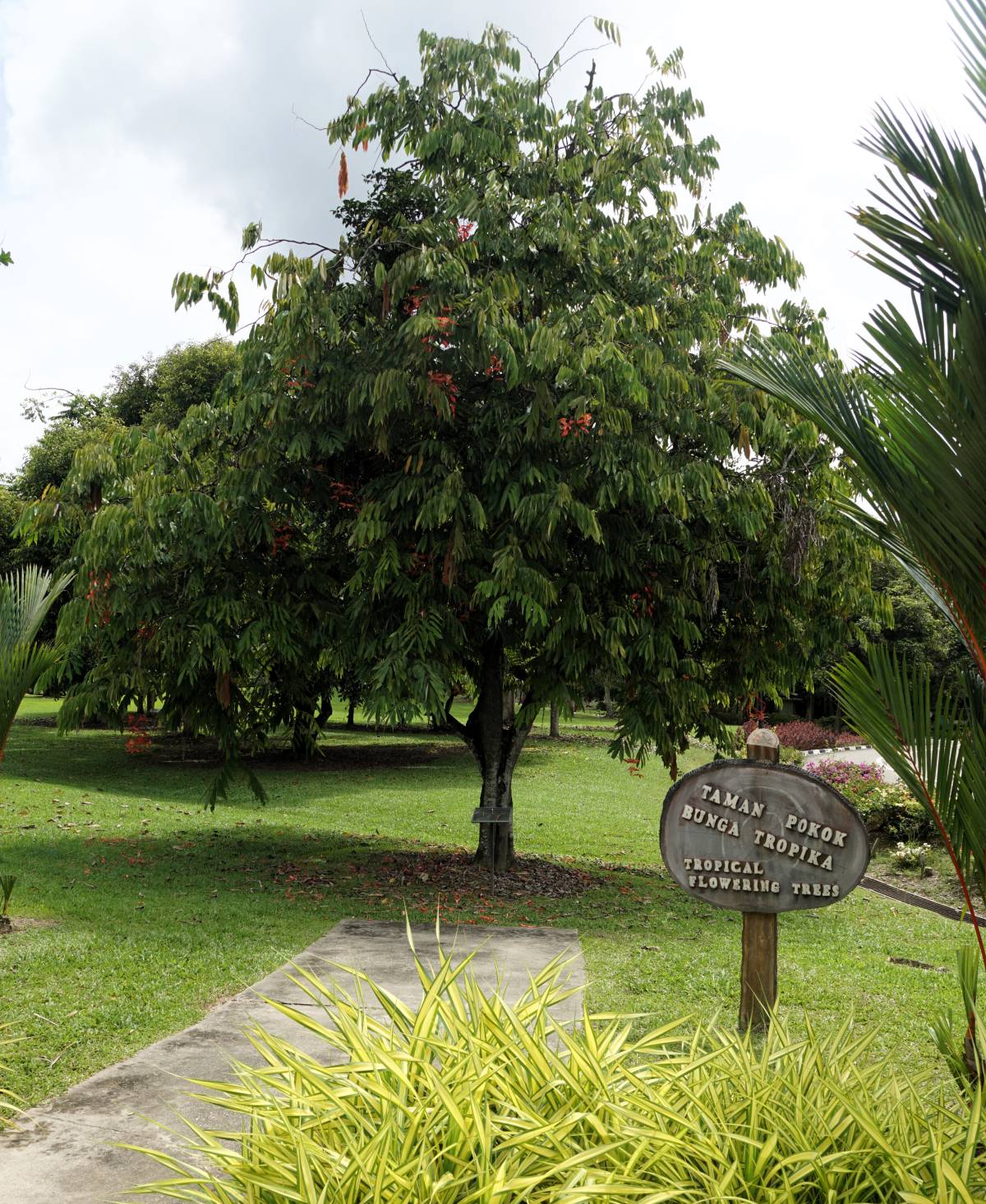
The park was officially opened to the public on March 25, 2001 by then Prime Minister Dr. Mahathir. You can see the tree he planted on that occasion near the park offices. (below) Combining botanical gardens, research facilities and recreational areas it was envisioned as a place where visitors could learn about agriculture while enjoying themed gardens, lakes and nature trails.

The Ornamental Garden has 1500 plant species. The cultivated area of the park is 500 acres while the total park area is 1500 acres.
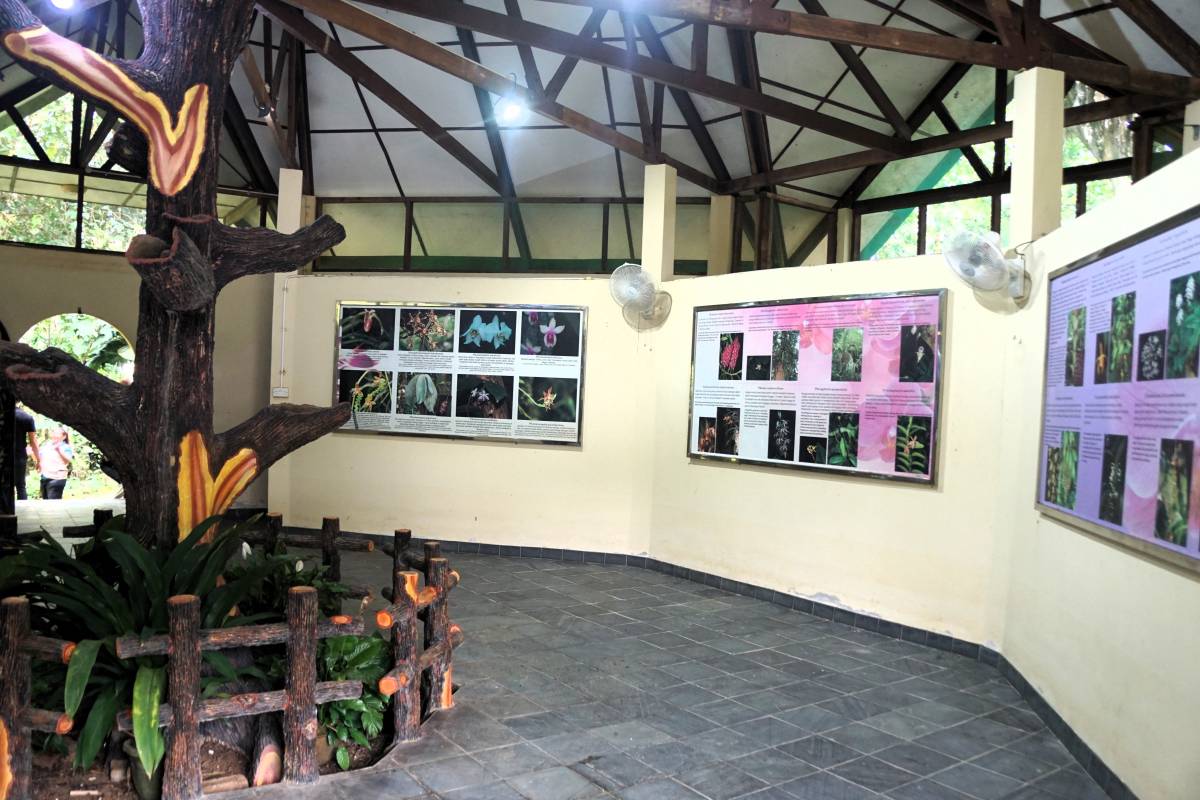
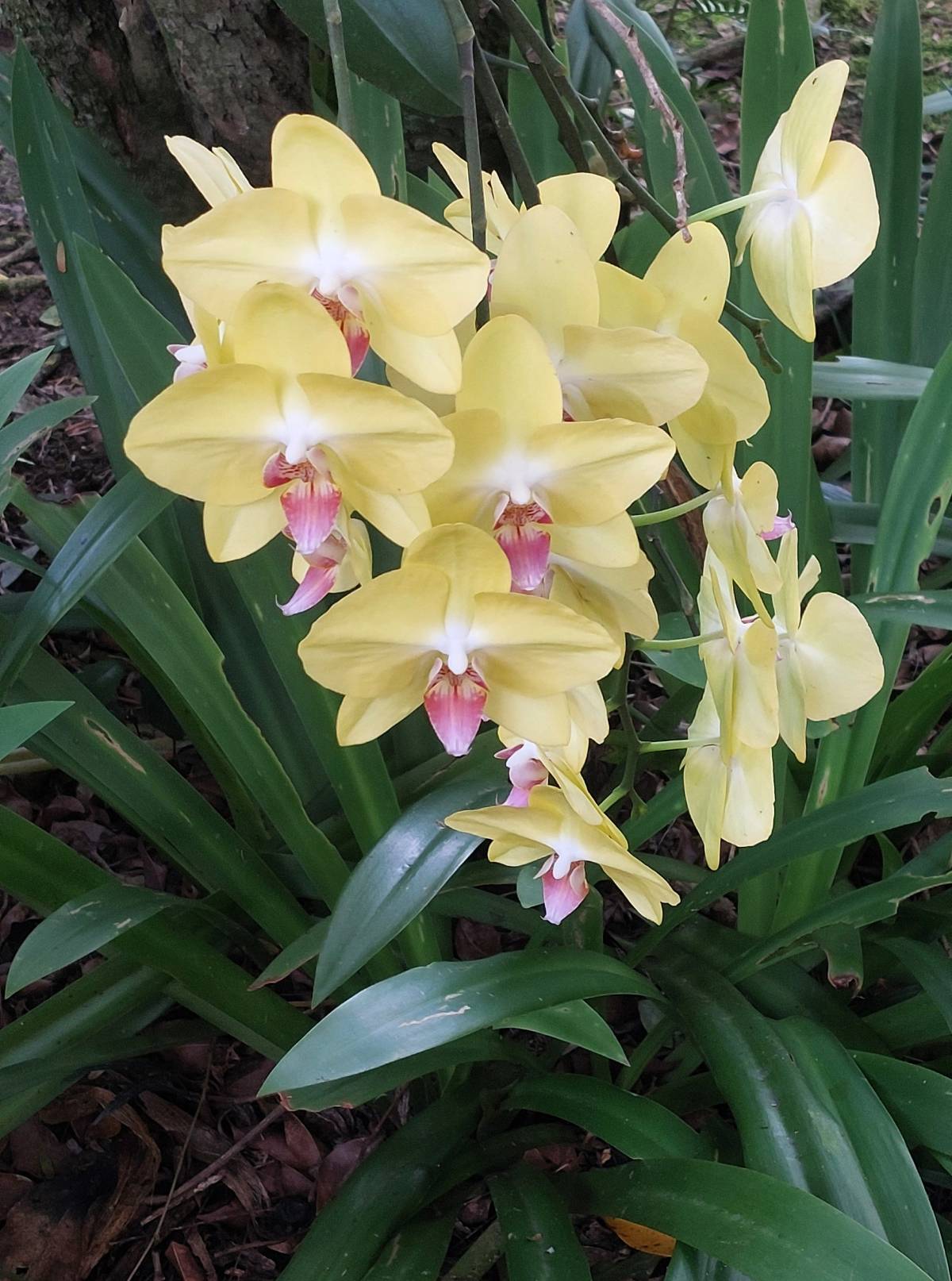
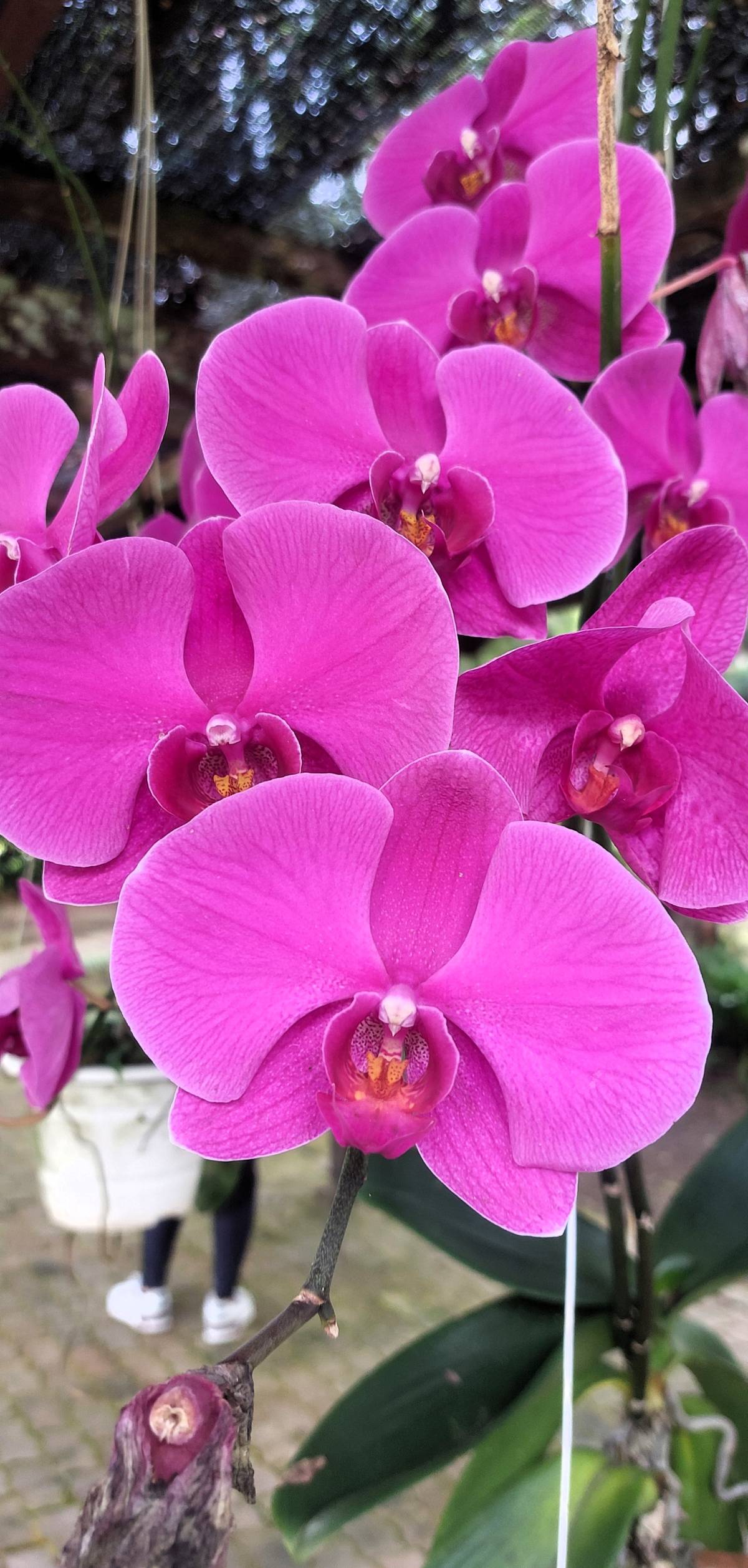
The agricultural, horticultural and conservation centre is under the Department of Agriculture Sabah. Plant conservation was a primary objective. The Park has collected plant species from all over the world. “We have at least 350 species here, including many rare and endangered species such as the Elephant Ear orchid, the Rat-tail orchid and not forgetting the many species of Slipper Orchids, many of which are endemic to Borneo. “The wild orchids bloom in their own time. The official plant of the park is the Orkid Samazau, which looks like a dancer," Viana told us.



While we toured the park our attention was drawn to a very small orchid that you can barely see. “There are 1200 orchid spicies in Sabah,” Viana said. “There are 250 species in the park.”
The park displays exotic flowers and fruit from Central and South America, Asia and Africa, as well as native Bornean species. This reflects its original mission as a mega botanical garden and educational resource. The Rafflesia Keithii, though one of the smaller Rafflesia, is one of the stars of the Park. It last flowered in 2022.

As well as conservation, research and training are important activities at the park. “Students are welcomed here for educational training and field trips. We also do Industrial Training such as agricultural courses, and they do practical work such as landscaping.
“As we need funding, agrotourism is important for us. Money is raised through ticket sales, guided tours, plant sales, events and educational programmes. However, it is government funding that keeps the park financially viable. A yearly flower festival is held. Mural painting, games and e-sports attract visitors. A photo competition of park scenes is held in August – September. Fishing also brings in money with an entrance fee charged, along with 5RM for a rod.


Another source of revenue is the renting of chalets for 150RM a night and camping is available for overnight guest. The park welcomes about 15,000 visitors a year.
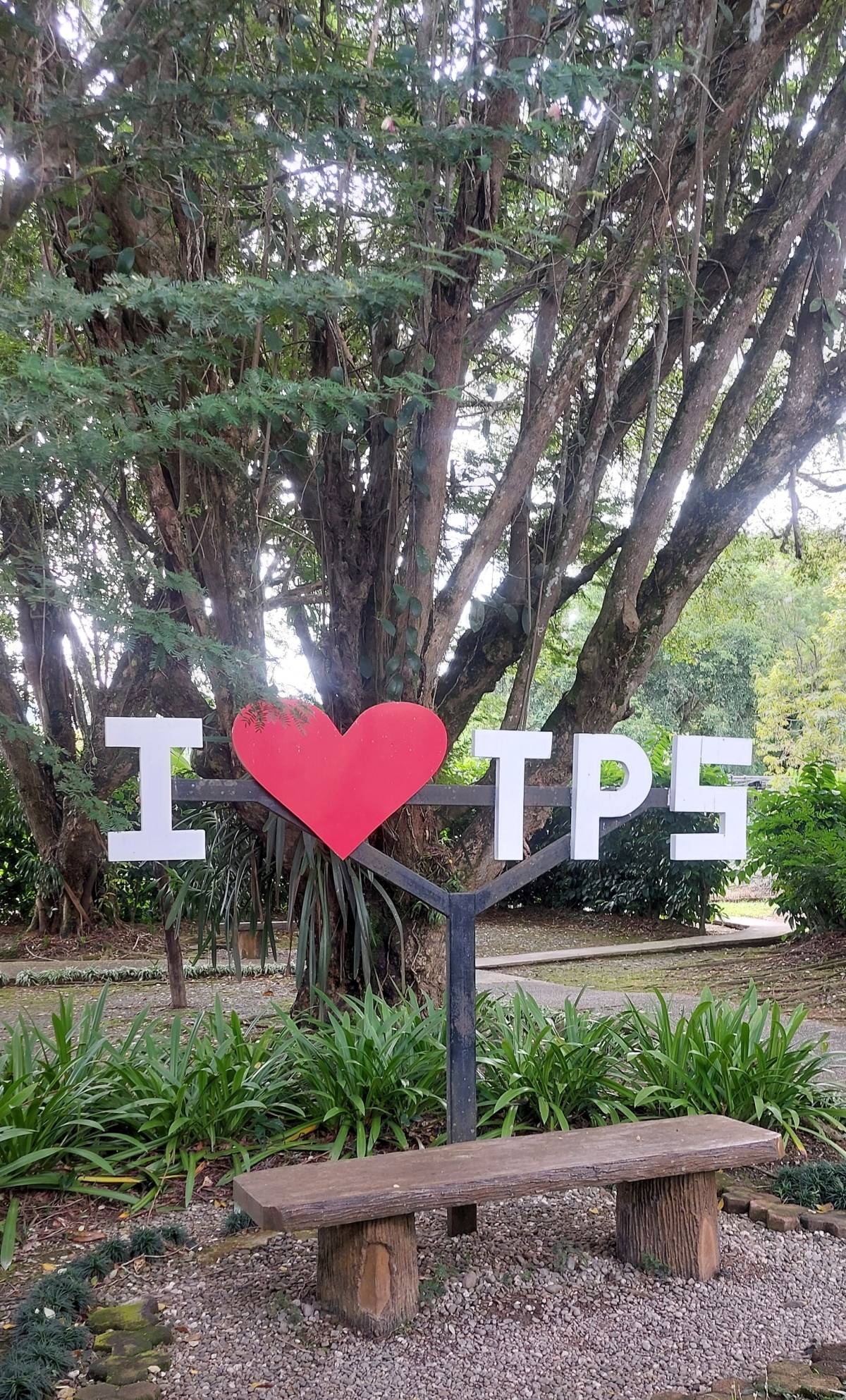
We visited the Tenom Orchid Centre which was the original name of the Sabah Agriculture Park. It was founded in 1981 as a specialist orchid research and conservation facility before the site was expanded into the full botanical and agro‑tourism park that it now is.


In the Evolution Garden, a themed botanical zone that showcases how plants have changed over hundreds of millions of years, the Cannonball Tree from South America resides. The large, spherical fruit looks like rusty cannonballs and they stink. When they fall they explode making a loud sound like the name suggests.

Activities offered include jungle trekking, visit to the animal park, camping, trails and fishing.
It is not only a beautiful park, it is informative and interesting. You can stay for a day or overnight. It is well worth a visit.


Sabah Agriculture Park
W.D.T No. 28,
Taman Pertanian Sabah,
89909 Tenom,
Sabah, Malaysia
Taman Pertanian Sabah
WDT, 28
89909 Tenom, Sabah
+60 88 258 529
agripark@sabah.net.my
sabah.net.my

ORDER HERE: fcowanmedia@gmail.com : Or go to Amazon: The Orange Sofa: Unicorn Eyes: Walking Home: Singapore Circuit Breaker. Zero Visibility - The Rescue of the Thai Football Team trapped in the cave in Northern Thailand.