

Bar Kap Opens At The House of Tan Yeok Nee
Reimagining One of Singapore’s Most Iconic Heritage Homes as a Contemporary Cocktail Destination
(Singapore, June 2026) We’ve all gone by it countless times, and mostly didn’t pay much attention to it. Even when I got invited to BAR KAP at The House of Tan Yeok Nee I had to check out the address. Throughout its roughly 140-year history it has been more prominent at times, and less so at others. Now it takes on a new persona.
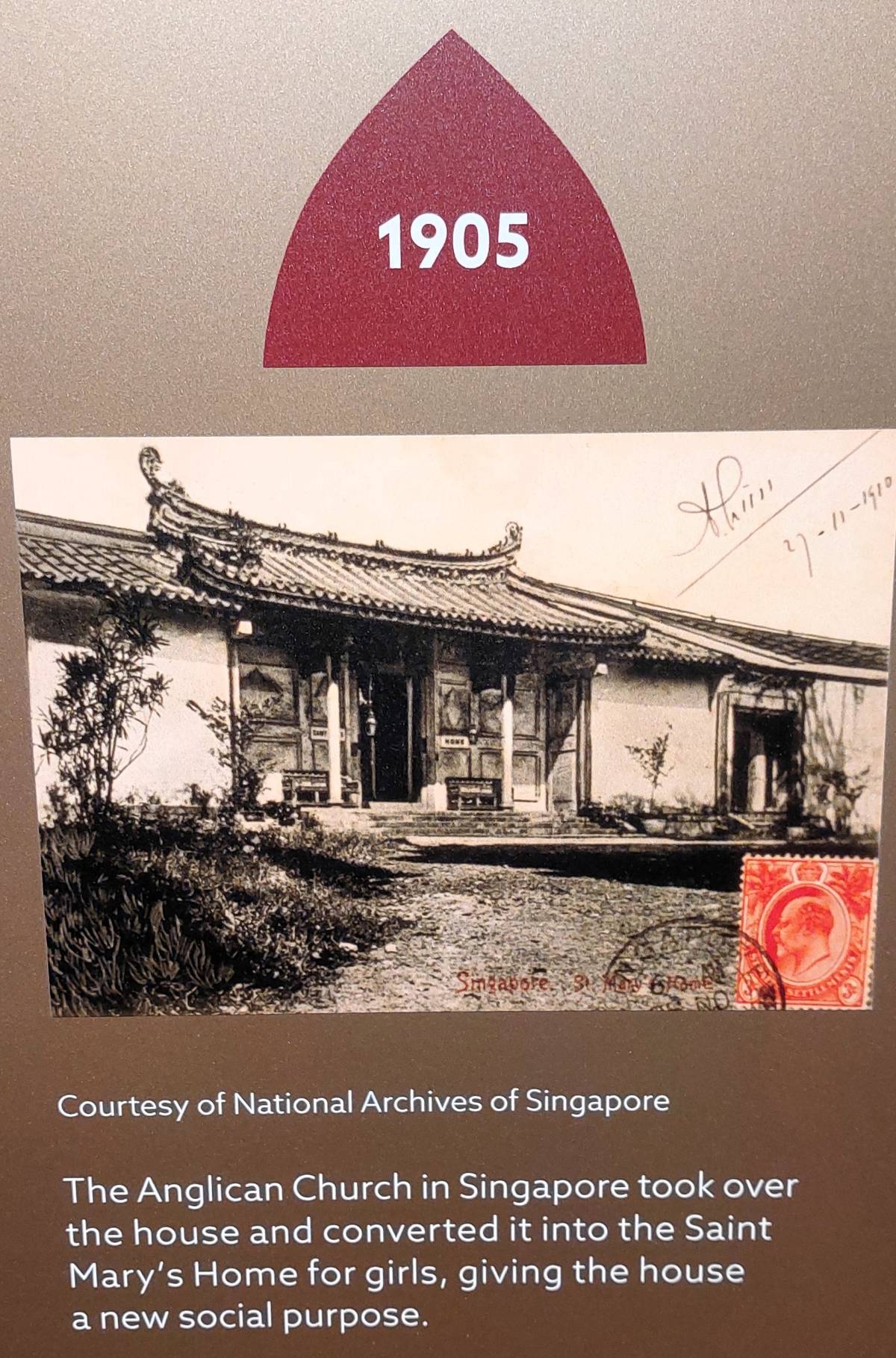
The House of Tan Yeok Nee was built between 1882 and 1885 as a private residence for Tan Yeok Nee (1827–1902), a wealthy Teochew (from the southeast coast of China) businessman who made a fortune in pepper, gambier and cash crops (such as opium). As Chris, who was working the bar on the very stormy night I was there, pointed out, opium wasn’t illegal at the time.



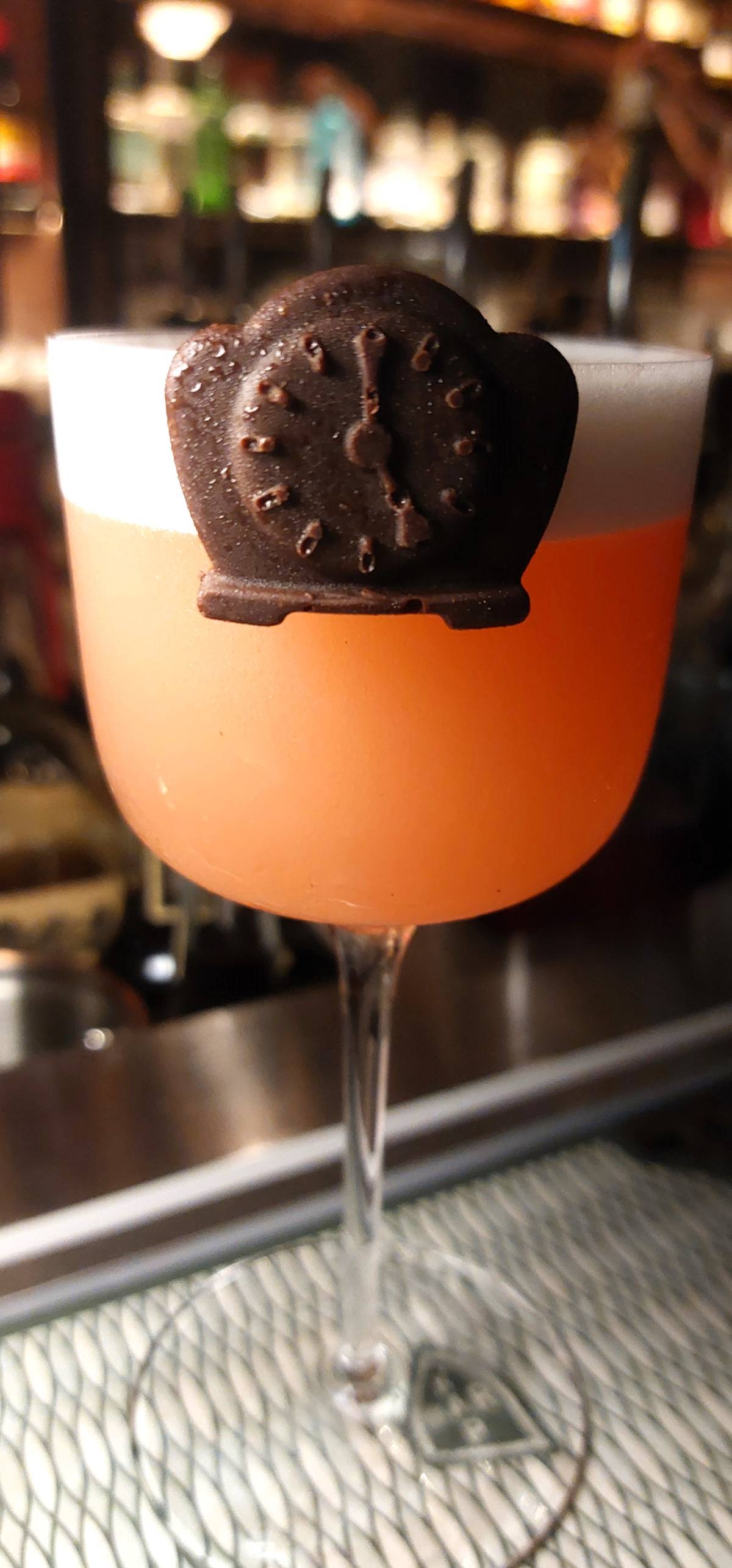
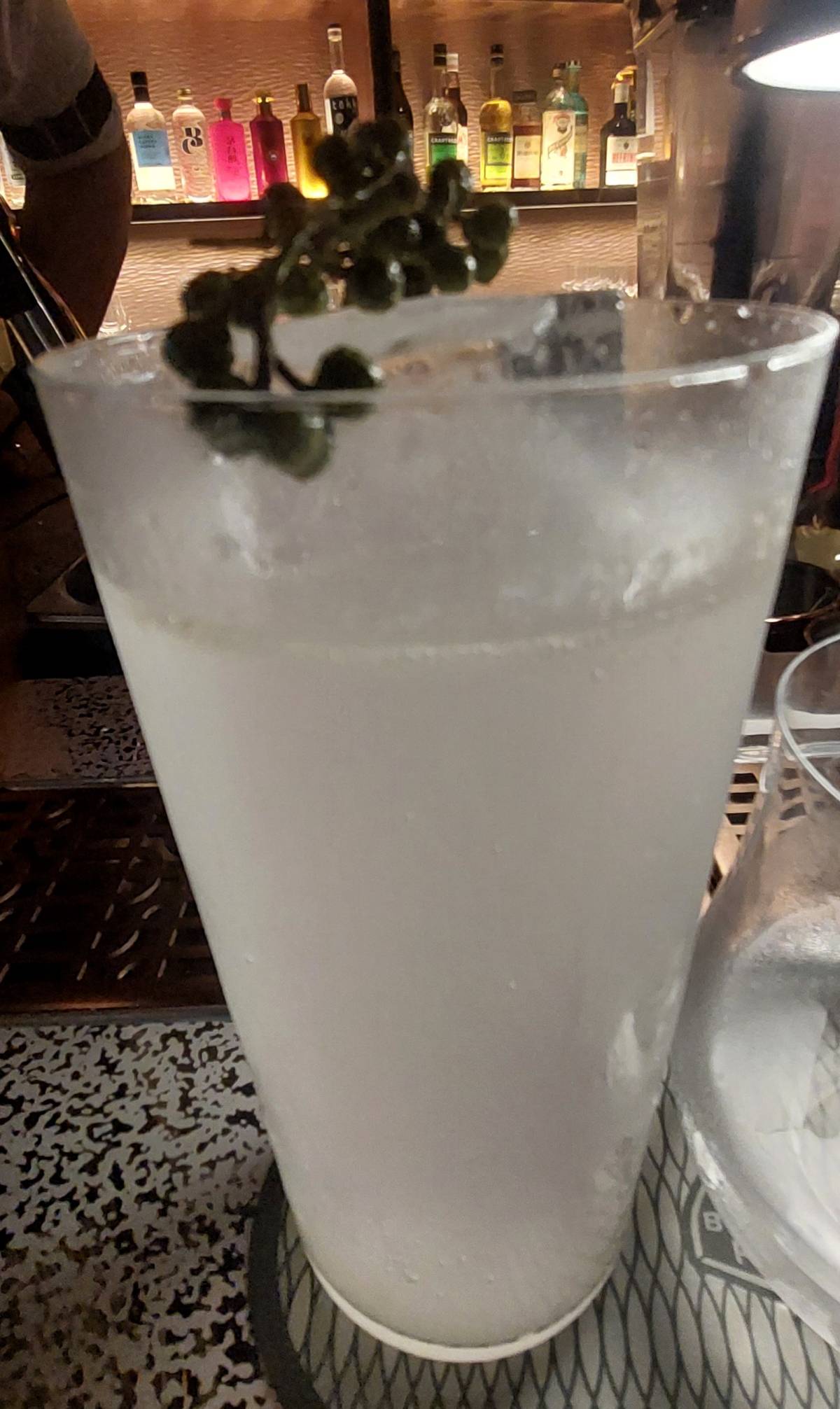
Pepper Peddler Every Railway Station needs a Good Clock
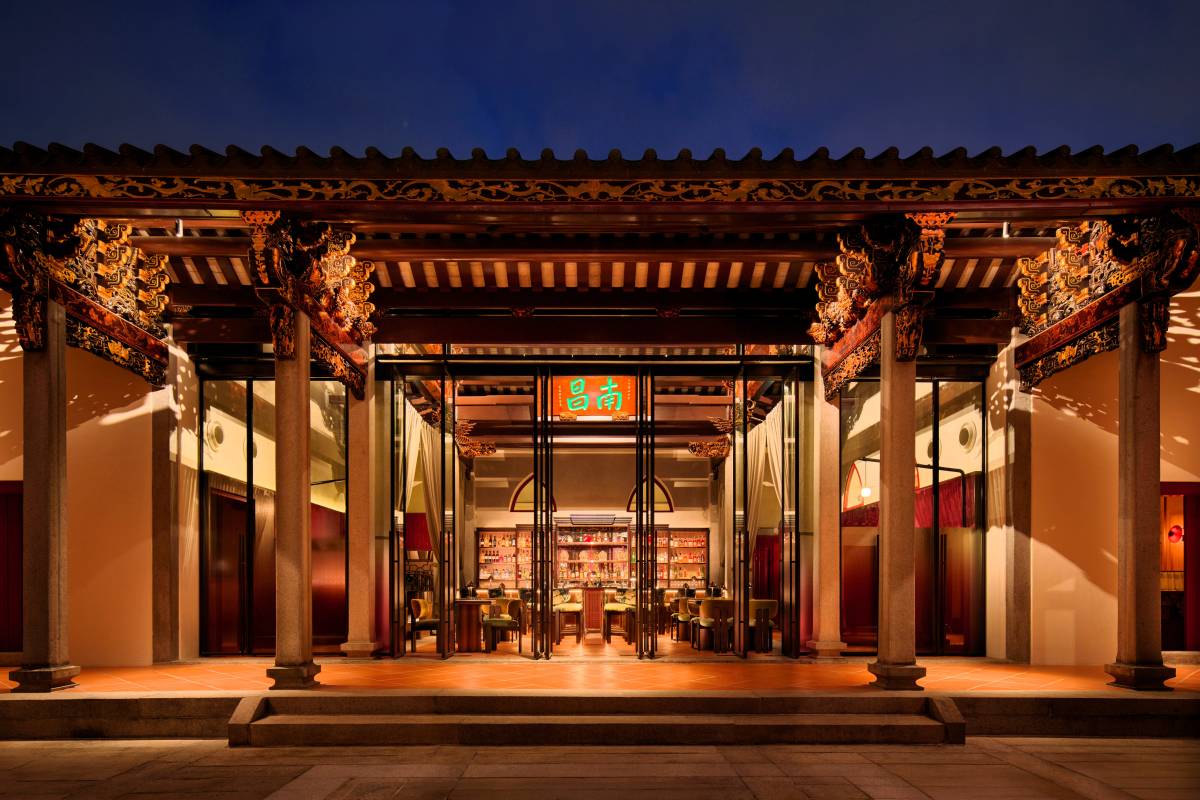
The house was designed in traditional southern Chinese architectural style, reflecting Chinese craftsmanship and feng shui principles. Fortunately for us, it has been refurbished to show off its original beauty. And it is beautiful. I think it is perfect for a first date. If you get tired of looking at your new companion, there is plenty to look at in this heritage gastro bar.
Not only is the food and drink of BAR KAP new to me, but to learn of the Tank Road Railway station came as a bit of a surprise. Despite being in Singapore for 26 years, I’d never heard of it. Most are familiar with the now closed Tanjong Pagar Station. After the Tan family moved out circa 1902, the building was used as the residence of the Tank Road Railway station master. Subsequently it became St Mary’s Home and School for Eurasian Girls. In 1938, it was acquired by the Salvation Army for its Malaya headquarters.
Its darkest period was Singapore’s darkest too. During the Japanese occupation from 1942–1945, the house was taken over by the Japanese military and suffered from their abuse. Following the war, it was repaired and reopened in 1951.


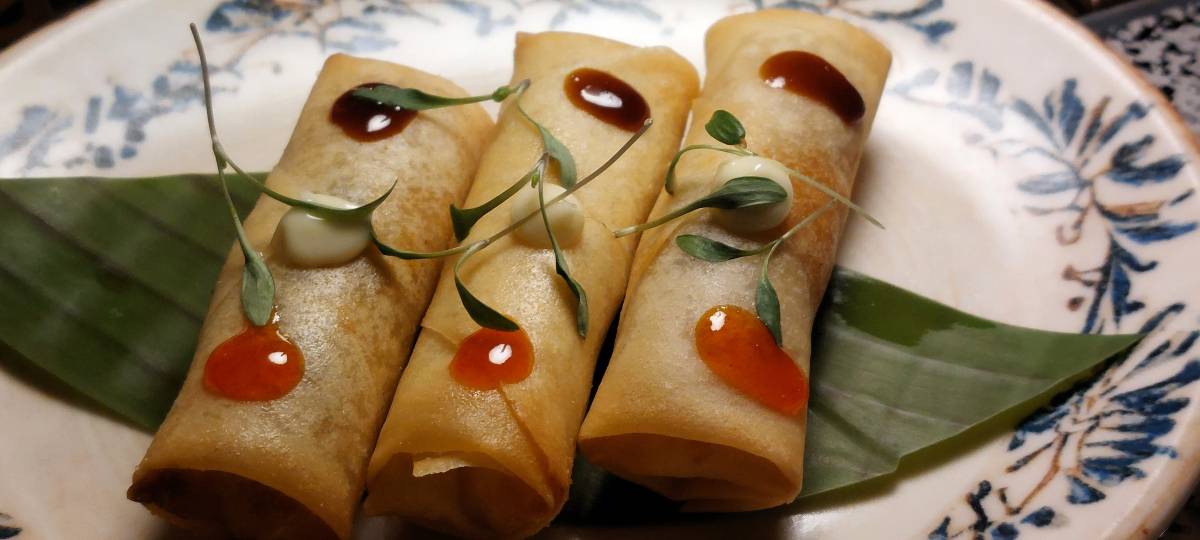
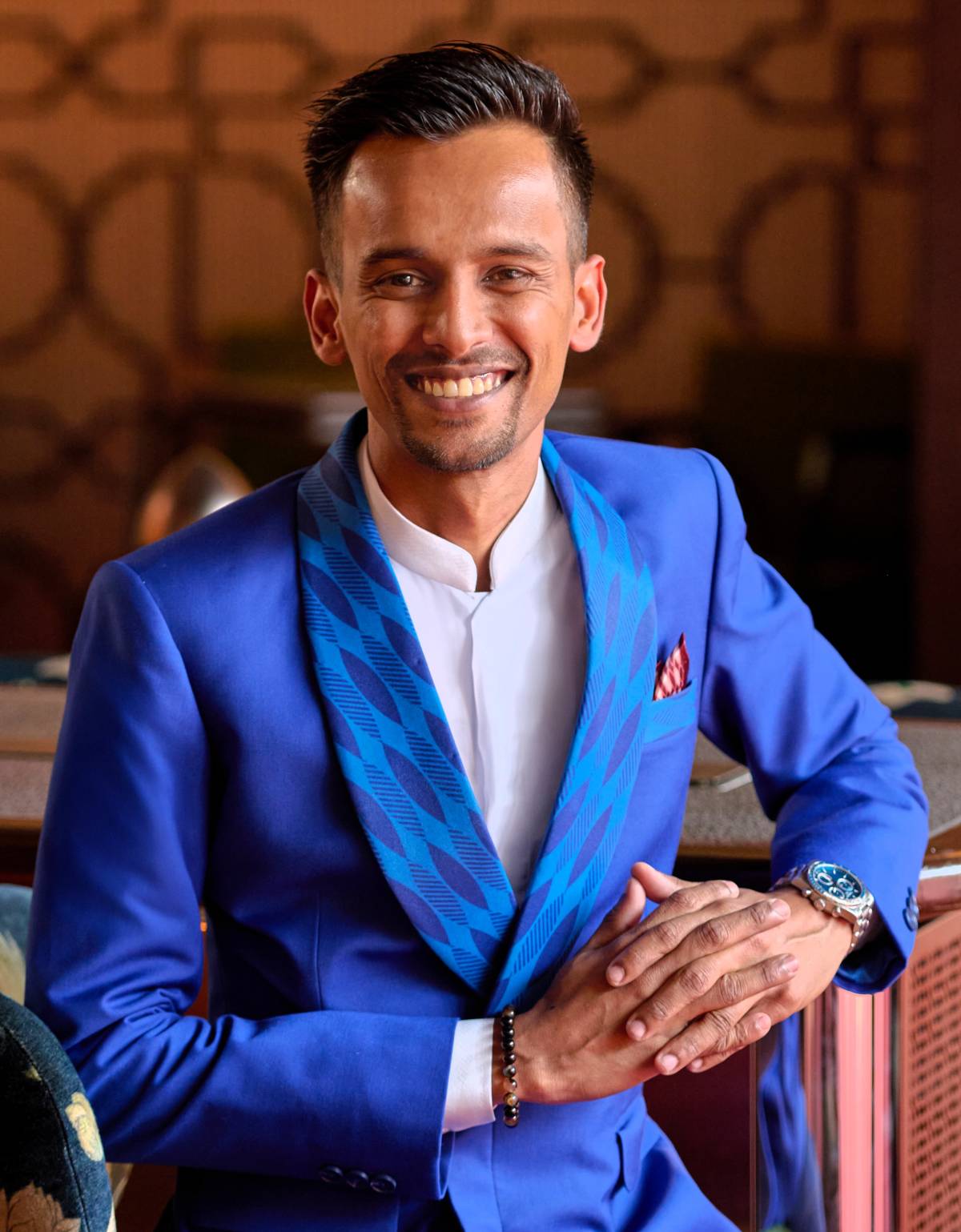
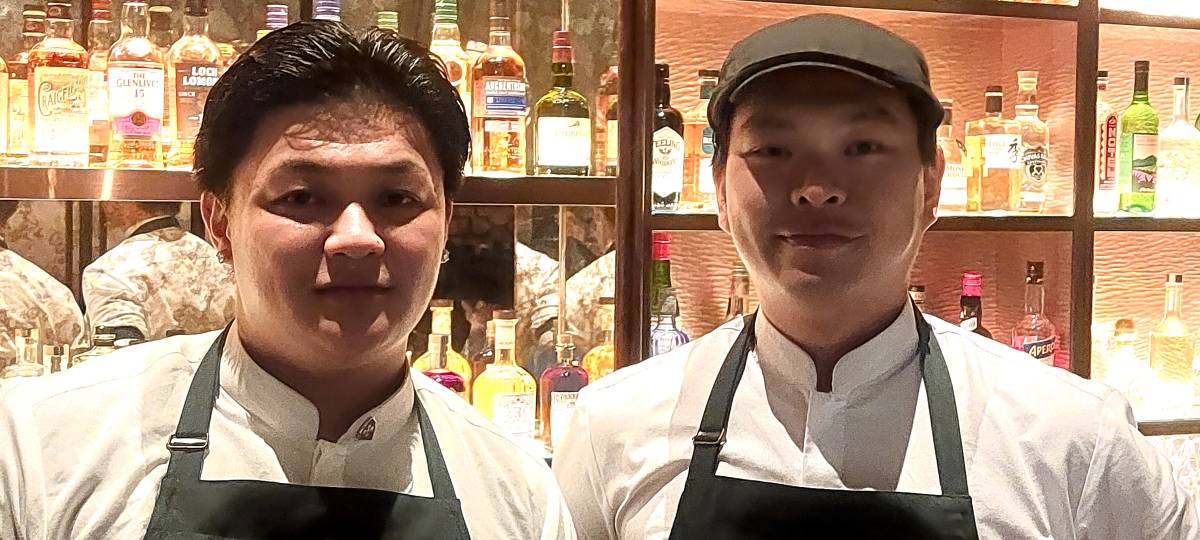
Golden Spring Rolls Bar Managers Chris and Edwin
With Singapore realizing heritage value throughout the Lion City, it was gazetted as a National Monument in 1974. The Salvation Army had reclaimed it and used it until 1991. In the late 1990s, the building was restored and subsequently occupied by the University of Chicago Booth School of Business (Asian campus) and other educational and commercial uses.
From 2000 until present, when the building underwent further restoration, I was aware of its existence, but never engaged with it. In May 2026 it reopened as a heritage, cultural, and lifestyle space, with galleries, events and public access. And of course BAR KAP.
Why do I tell you all this, when essentially my job is to write a review of the bar/restaurant? Because I love history and because it is important to the current custodians of The House of Tan Yeok Nee.


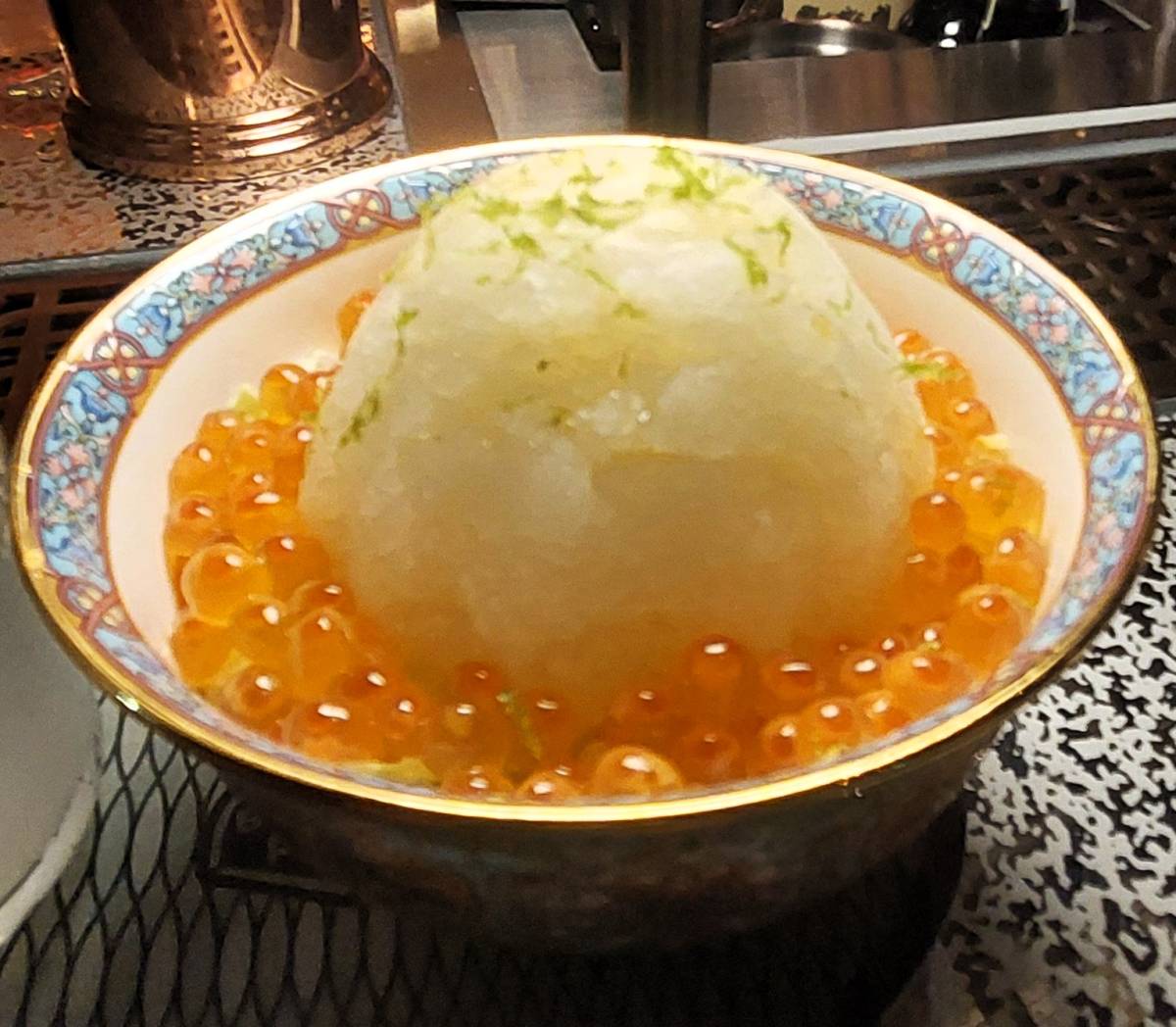
Savoury Granita General Manager Kavish Hurrydoss
It is not only important to the crew who work their, but the people to come to enjoy a drink, a meal and a moment in communion with historic Singapore. Marcel Proust writes in In Search of Lost Time (Remembrance of Things Past), that “the smell and taste of things remain… bearing… the immense edifice of memory.” I would add that homes also have a store of things from the past that have not passed away. And when you go to BAR KAP, on a first date, an anniversary, a special time with friends, you are adding to that store that will create the atmosphere for future visitors. So let’s dig in to what it now is.
A new chapter begins at The House of Tan Yeok Nee, the last of Singapore’s famed Four Grand Mansions, with the opening of BAR KAP, an intimate cocktail bar. Here, heritage is considered when every drink is concocted and the result is a nod to the building’s storied eras.
Coming in out of the rain, drenched, I entered into an unfolding sequence of chambers that were crackling with conversation. Despite the rain, and it being midweek, the place was abuzz. I was shown to a seat at the bar. Chris introduced himself and reached across the bar to shake my hand. Throughout the evening he kept me informed on the drinks he created and told me about the food the very quiet Ay slipped in front of me. Check out the menu.

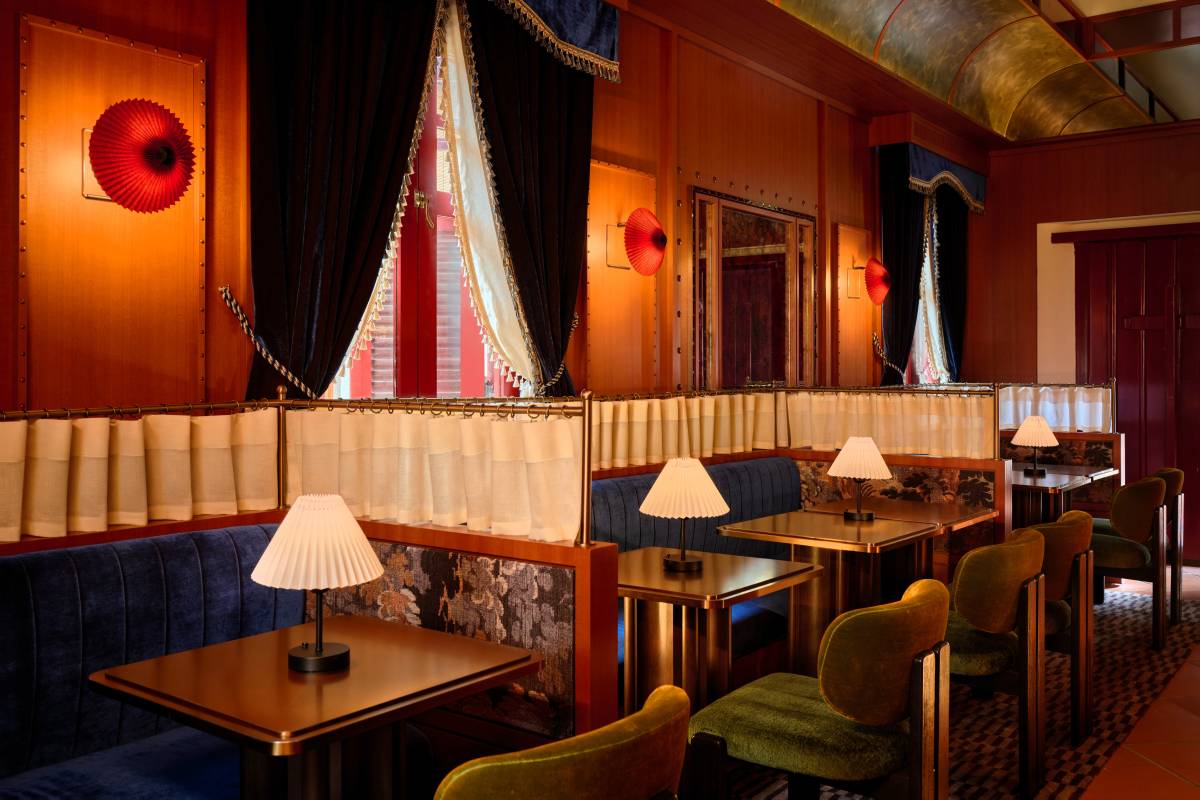
The Carriage Room
BAR KAP offers reinterpretation, expressed through progressive cocktails and genuine hospitality. “BAR KAP has always been about creating something that feels considered but welcoming; a space where people can engage with history in a way that feels organic and intuitive,” says Chai Karim, Principal of Gaia Lifestyle Group and Karim Family Foundation, which restored the house. “The House of Tan Yeok Nee carries so much character, and our role was to respond to that—to build something that respects the past while feeling relevant to how people want to experience hospitality today. Our guiding philosophy is simple: heritage in the walls, modernity in the glass, generosity at the table.”
Cocktails Shaped by the Eras of The House
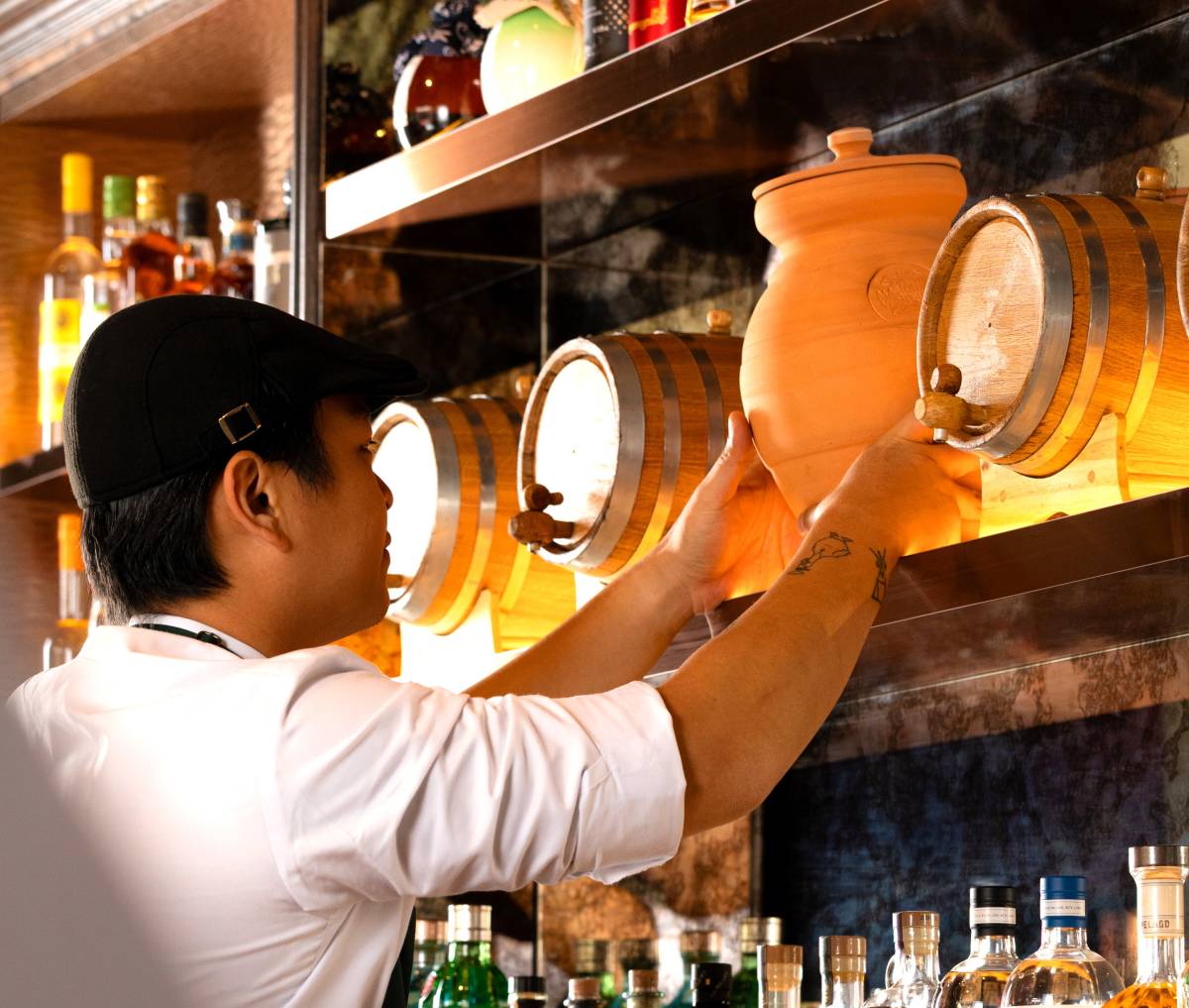
Conceptualised in partnership with Studio Ryecroft, the menu explores the House of Tan Yeok Nee's different eras, from its earliest residence to its current form. Within each era is a range of cocktail styles, including a zero-proof selection crafted with the same precision as its spirited counterparts, alongside Singapore’s foremost clay-ageing program, where beverages evolve with the quiet passage of time.
Bar Manager Edwin Tan adds, “When guests come to BAR KAP I want them to leave not just with a memorable night, but with a sense of the stories that came before it. Each era is therefore designed with balance in mind, offering a considered mix of styles so that every guest finds something that resonates.”
The menu opens with the Kapitan Era, a tribute to Tan Yeok Nee himself. Inspired by the life of this well-travelled Teochew merchant, who journeyed between Singapore and the wider region, the cocktails of this era are shaped by the goods he traded and the exchanges he encountered along the way. Pepper Peddler (S$28) celebrates the spice that built the Kapitan’s empire, combining baijiu, gin and makgeolli in a bright, effervescent highball. Lifted with citrus, pepper, and a firewater tincture, a gentle peppercorn heat opens the palate, before softening into softer tropical notes and a subtle, lingering chocolate finish from the baijiu. This will open your eyes.


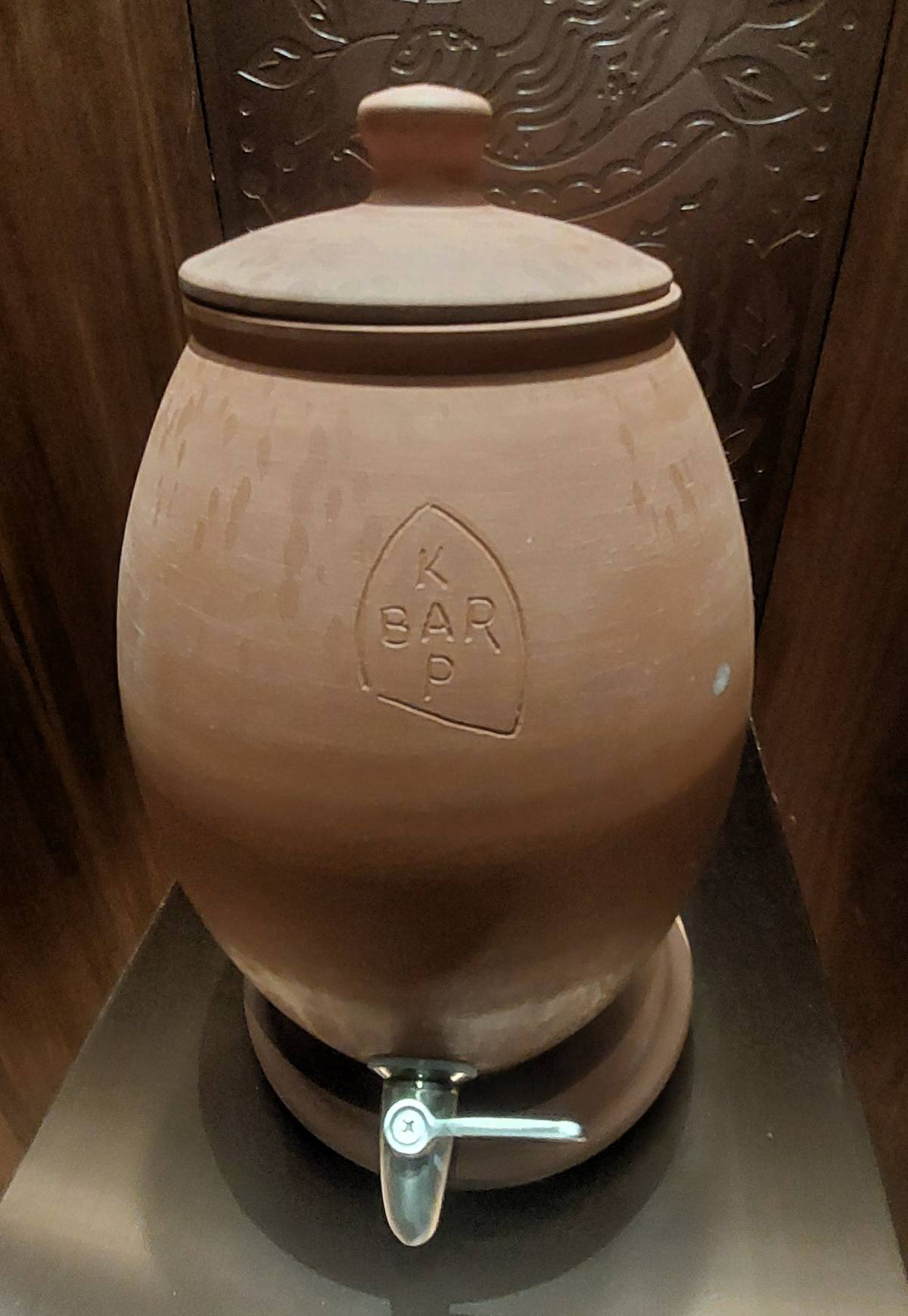
The clay-ageing program
Mǎi Bàn(S$26), the Chinese term for a middleman who links traders and producers, is a dessert-style sour made with raspberry, vodka, coconut, and a housemade lollipop garnish. Recalling the years after Tan Yeok Nee’s departure, the Station Master Era pays tribute to the house's next occupant, drawing on ingredients and styles likely favoured by the British station master.
Tank Road (S$28) —referencing the former railway hub down the road—pairs roasted orange and bay syrup, grapefruit, bitters, and scotch in a refreshing whisky sour-style serve, accompanied by a rosemary-infused chocolate. Meanwhile, the spirit-forward Dynamo (S$28) weaves Irish whiskey, amaro, sherry, and Drambuie, deepened with soy and nuanced with chocolate and cardamom. The drink forms part of BAR KAP’s clay-ageing program, where cocktails are matured in purple clay vessels to soften texture and refine flavour. BAR KAP will be the first bar in Singapore to revive the 8,000-year-old practice, with plans to develop a growing collection of aged beverages.
The Order Era draws from the building’s later chapter as St Mary’s Home and School for Eurasian Girls. A variation of the martini, Lights Out (S$25) is a tableside serve of gin, secco vermouth, and mandarin, finished with fragrant pandan oil. Inspired by the vessel used to carry burning incense, Censer (S$26) layers mezcal and Campari with pineapple and lime for a drink that is smoky, bright and effortlessly drinkable. A torched pineapple ring is gently submerged in the cocktail as a finishing touch.

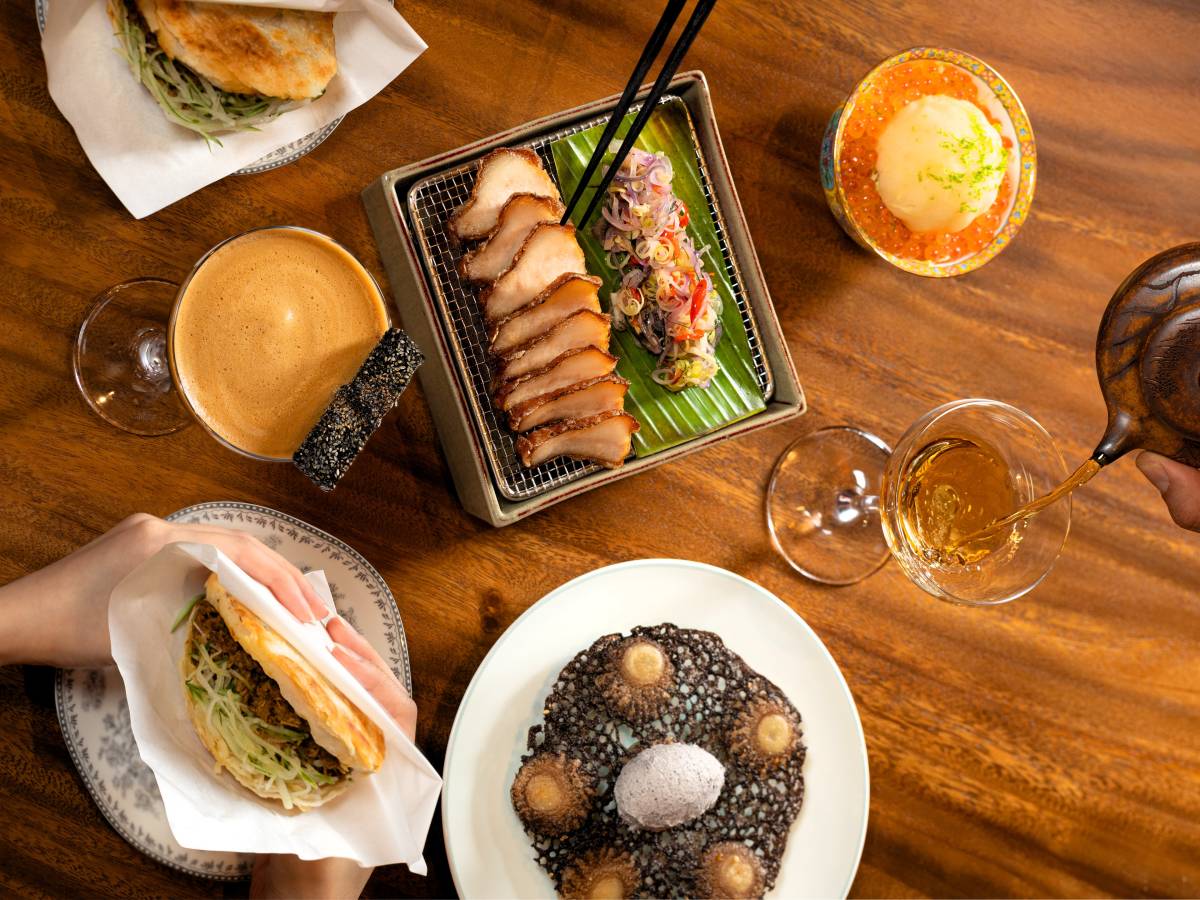
BAR KAP Food and Drinks Group Shot
Bringing guests back to the house in its modern form is the Dynasty Era. TCM No. 3 (S$18) is a creamy zero-proof cocktail, featuring soy milk, ginger, honeydew, and gula melaka. It is presented in ceramicware and honours the building’s most recent past as a traditional medicine clinic. Black Lacquer (S$28) blends coconut rum, cherry wine, locally sourced cold-brew kopi, and molasses, finished with shortbread. Rooted in lacquerware’s symbolism of longevity, it speaks to preservation, reinvention and time, much like the enduring spirit of the House of Tan Yeok Nee.
A Menu of Contemporary Flavours, Designed to Complement
The culinary offerings centre on familiar flavours, reimagined with a contemporary touch. It moves from bright, textural starters, such as the Savoury Granita (S$18) with salmon roe and cabbage and the HTYN Salad (S$10) featuring black fungus and cordyceps, to more robust, shareable plates shaped by Southeast Asia’s layered influences. Mains include Mee Kapitan (S$20), enriched with minced pork and shrimp paste, and a BAR KAP Bao (S$18) filled with fragrant beef and house-special achar. To finish, the menu turns to nostalgic Singaporean desserts, namely the Ice Cream Sandwich (S$9), a playful rainbow ice-cream sandwich.
A National Monument, Reawakened For Contemporary Hospitality
A house to be entered and quietly observed, BAR KAP invites guests into a space where the city falls away. In the main hall, the original timber beams and intricate carvings overhead are accentuated by the considered placement of mirrors and reflective surfaces throughout the space. A Y-shaped console anchors the bar, designed for conversation and offering a closer view of the craft, while a central frost rail keeps drinks perfectly chilled. Original interiors are further complemented by upholstered chairs with handwoven textiles reinterpreting Teochew motifs. Flanking the hall, elevated booths echo the intimacy of traditional Chinese teahouses, designed for groups.
Beyond, a series of private rooms unfolds, each carrying its own rhythm. The Carriage Room evokes a private train carriage, layered in fabric, timber and painted brass, while The Chamber is conceived as a traditional TCM apothecary, where the bar’s clay-ageing vessels are framed within mid-century joinery.
JING STUDIO JOINS THE HOUSE OF TAN YEOK NEE
Also opening within the house is Jing Studio, a contemporary tea destination bringing a fresh lens to traditional tea culture. Led by a Tea Master, the studio presents a curated menu of single-origin brews, refined blends, and restorative herbal infusions. Alongside its tea programme, Jing Studio presents a refined selection of pastries and confections, each designed to pair seamlessly with its teas. Jing Studio is open daily from 10:00am to 7:00pm, while BAR KAP is open daily from 5:00pm to midnight.
For reservations, please visit www.tablecheck.com, or call +65 8896 1035.
For more information, please visit BAR KAP at www.barkap.sg.
For more Information about The House of Tan Yeok Nee

ORDER HERE: fcowanmedia@gmail.com : Or go to Amazon: The Orange Sofa: Unicorn Eyes: Walking Home: Singapore Circuit Breaker. Zero Visibility - The Rescue of the Thai Football Team trapped in the cave in Northern Thailand